Motion Tracking Video Editor — Track Objects in Video Easily

Movavi Video Editor is an accessible motion tracking video editor for Windows and Mac that lets you pin text, graphics, stickers, blurs, and effects to any moving object in a clip — frame by frame, automatically.

No advanced skills are required: install the best motion tracking software, select the object you want to follow, and let the AI handle the rest — then export a dynamic, professional-looking video in any popular format.

Trusted by 70 million creators worldwide

70M+

users

190+

countries

15+

updates per year

10,000+

effects to choose from

Key Features of the Motion Tracking Video Editor

Everything you need for precise motion tracking video editing — from AI detection to export — in one application.

One-Click AI Motion Tracking

Movavi's AI motion tracking analyses your clip automatically, identifies the object you want to follow, and maps its path frame by frame without manual keyframing. Once the track is set, any element you attach — text, graphic, sticker, emoji, or effect — follows the object precisely through every frame of the shot, even through fast or complex movement.

Highlight and Conceal with Moving Masks

The Highlight and Conceal tool applies a moving mask to any region in the frame — useful for blurring faces, hiding licence plates, obscuring private information, or drawing viewer attention to a specific element that moves through a scene. The mask tracks with the subject automatically so you do not need to reposition it frame by frame throughout the clip.

Pin Titles and Stickers to Moving Objects

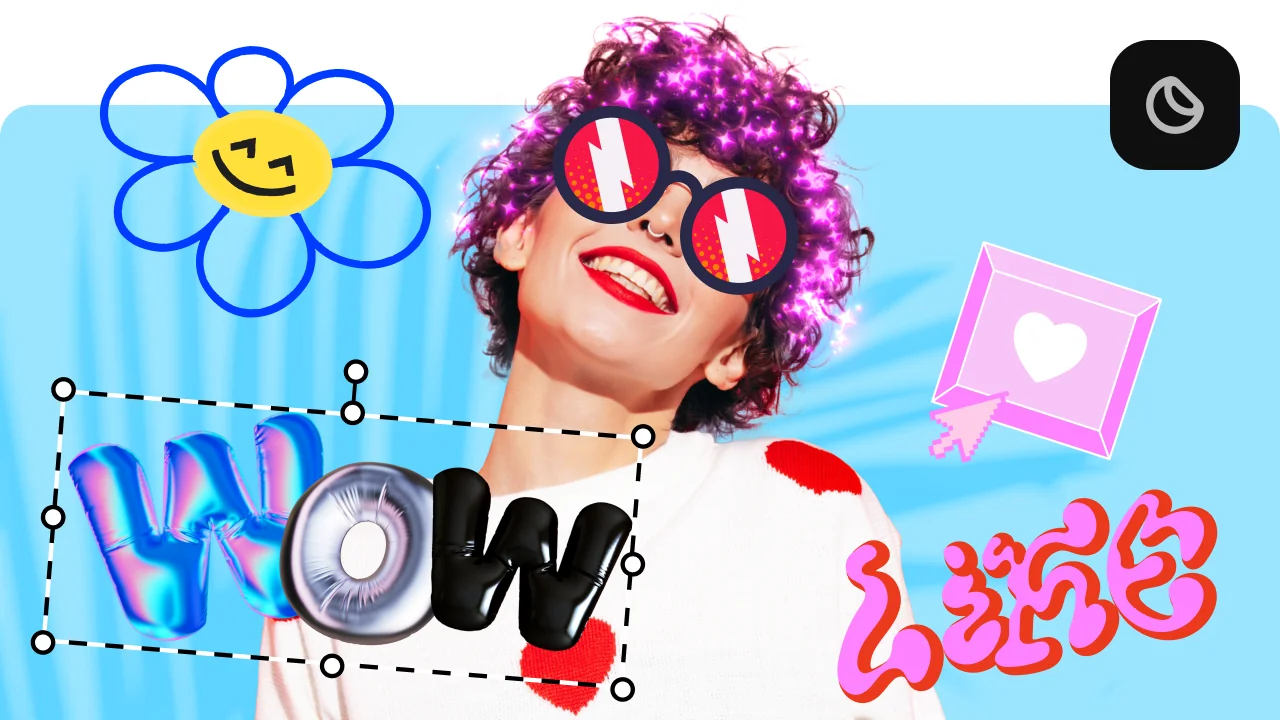
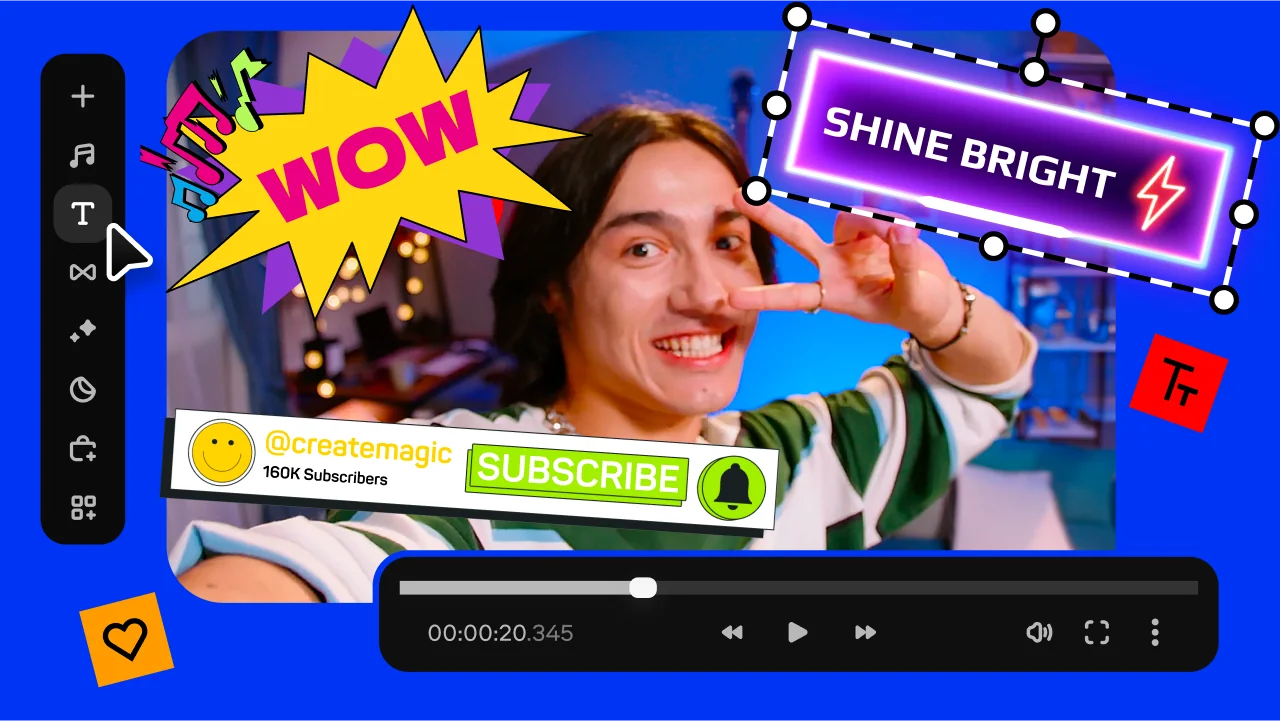
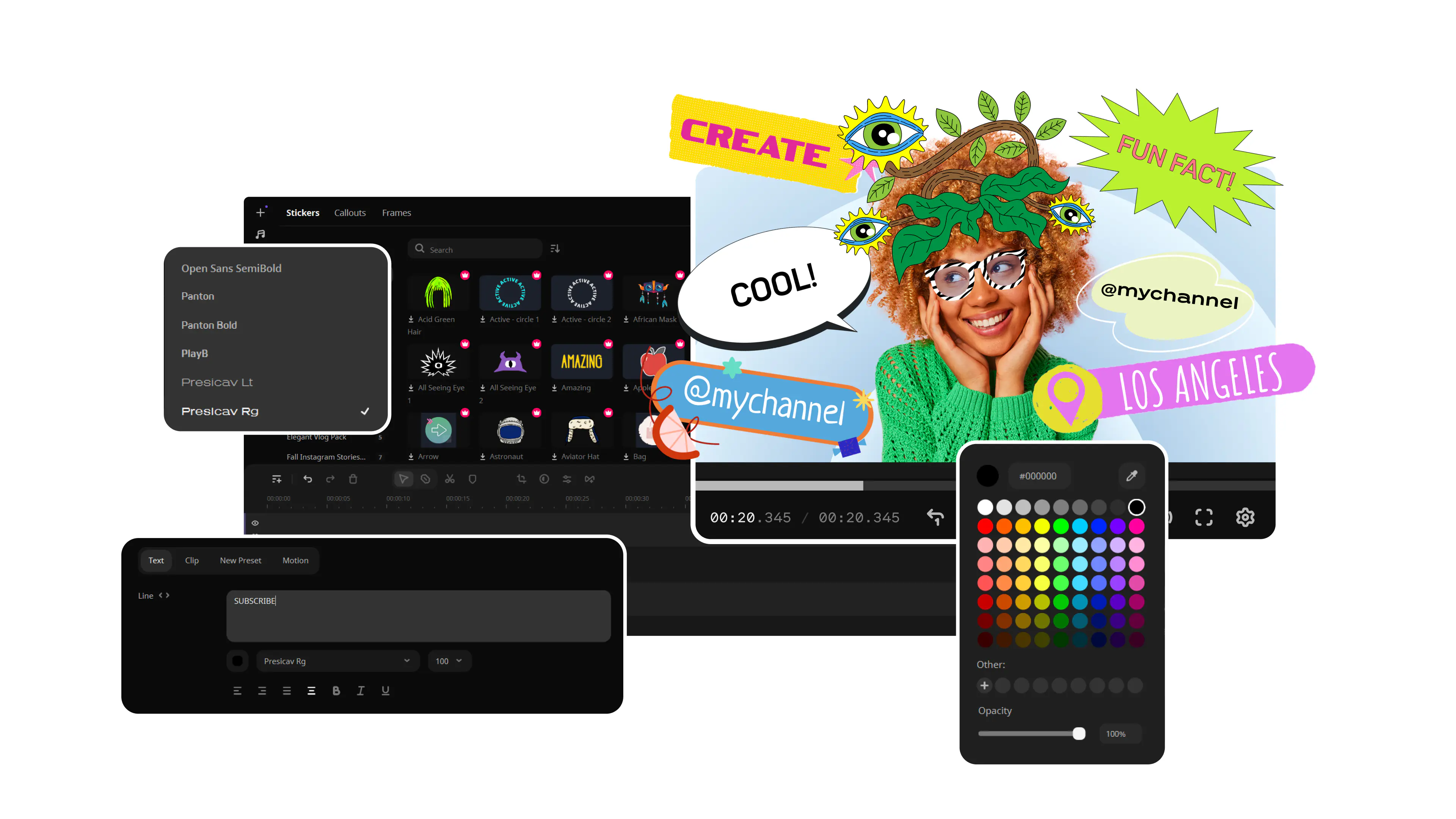
Text captions, name lower-thirds, branded titles, and decorative stickers can all be attached to a tracked object so they move with it in perfect sync. This is the technique behind sports overlays, social media video effects, and tutorial annotations that appear to float attached to a specific element in the footage rather than sitting static over the image.

Complete Video Editing Toolkit and Multi-Format Export

Motion tracking in Movavi exists alongside a complete video editing toolset: trim, cut, colour correct, add music, apply transitions, and composite multiple layers. When the edit is complete, export in MP4, MOV, AVI, or any other popular format. This means the entire motion tracking video editing workflow — from raw clip to finished file — stays inside one application.

Why Movavi is the Best Motion Tracking Software for Beginners

Three reasons creators choose Movavi over complex VFX tools.

AI handles the hard part

Manual motion tracking in professional VFX tools requires setting keyframes on every significant frame, adjusting for drift, and repairing lost tracks — a process that can take longer than editing the rest of the video combined. Movavi's AI motion tracking does this work automatically: you mark the object once, click Track, and the AI traces its path through the clip with no frame-by-frame attention required from the editor.

Accessible interface – no VFX experience required

The motion tracking tools in Movavi are found in the same Tools panel as every other feature in the editor — there is no separate mode, no secondary window, and no jargon-heavy workflow borrowed from broadcast software. The Highlight and Conceal panel shows you exactly what the mask looks like in the preview as you configure it, so the result is visible before you commit to processing the whole clip.

Windows and Mac – one purchase, no subscription

Movavi Video Editor installs natively on both platforms and is sold as a one-time purchase rather than a monthly fee. The 7-day free trial gives full access to the motion tracking tools — including export — before any payment is required, so you can verify that the tracking accuracy suits your footage and your project before committing.

How to add motion tracking to a video

Step 1. Install the match-moving software

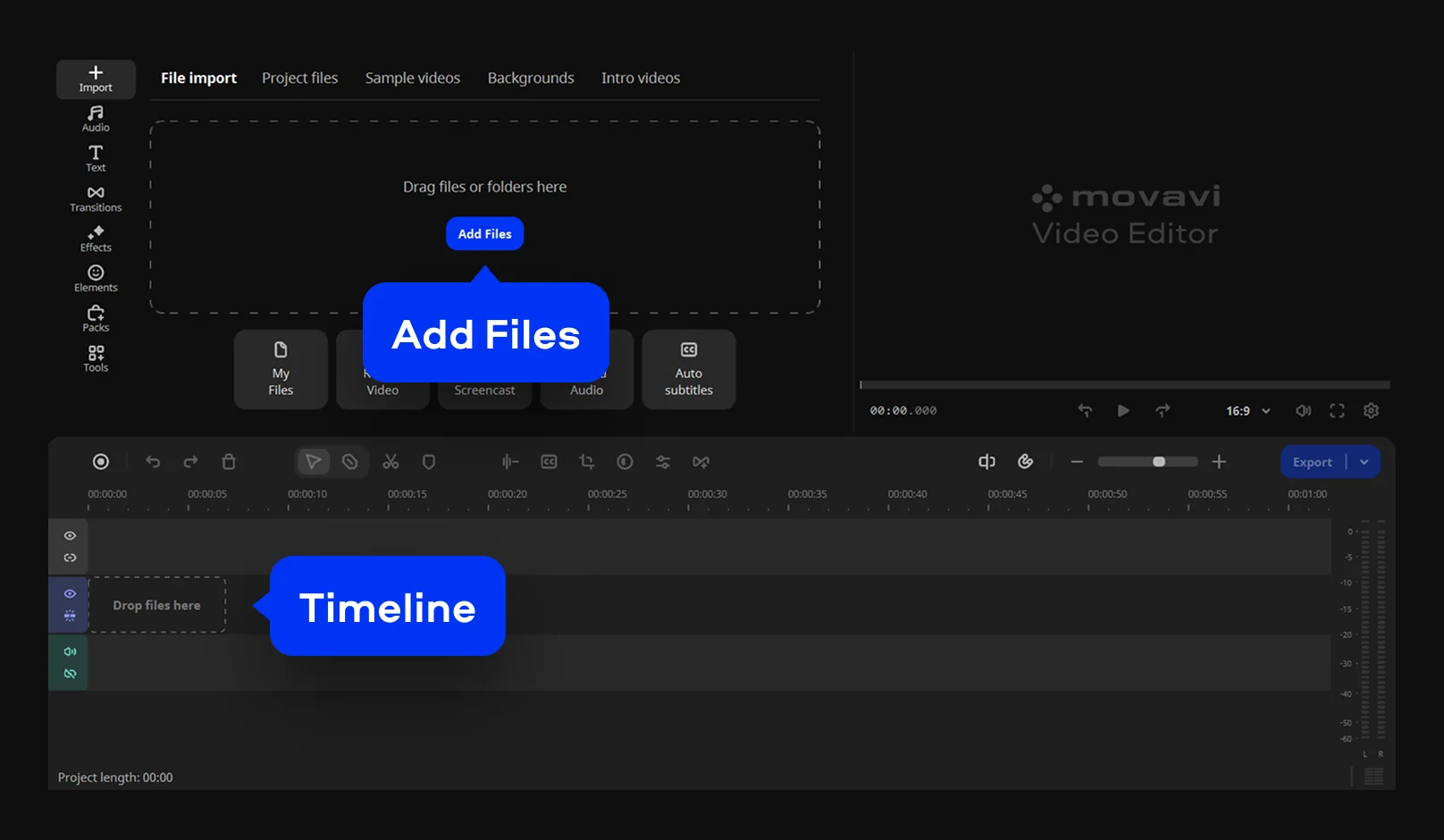
Download and install Movavi Video Editor. Open the camera-tracking software, click Add Files, and select the video you want to work with. Once the clip appears in the project files, drag it onto the Timeline so you can start editing.

Step 2. Open the masking tool

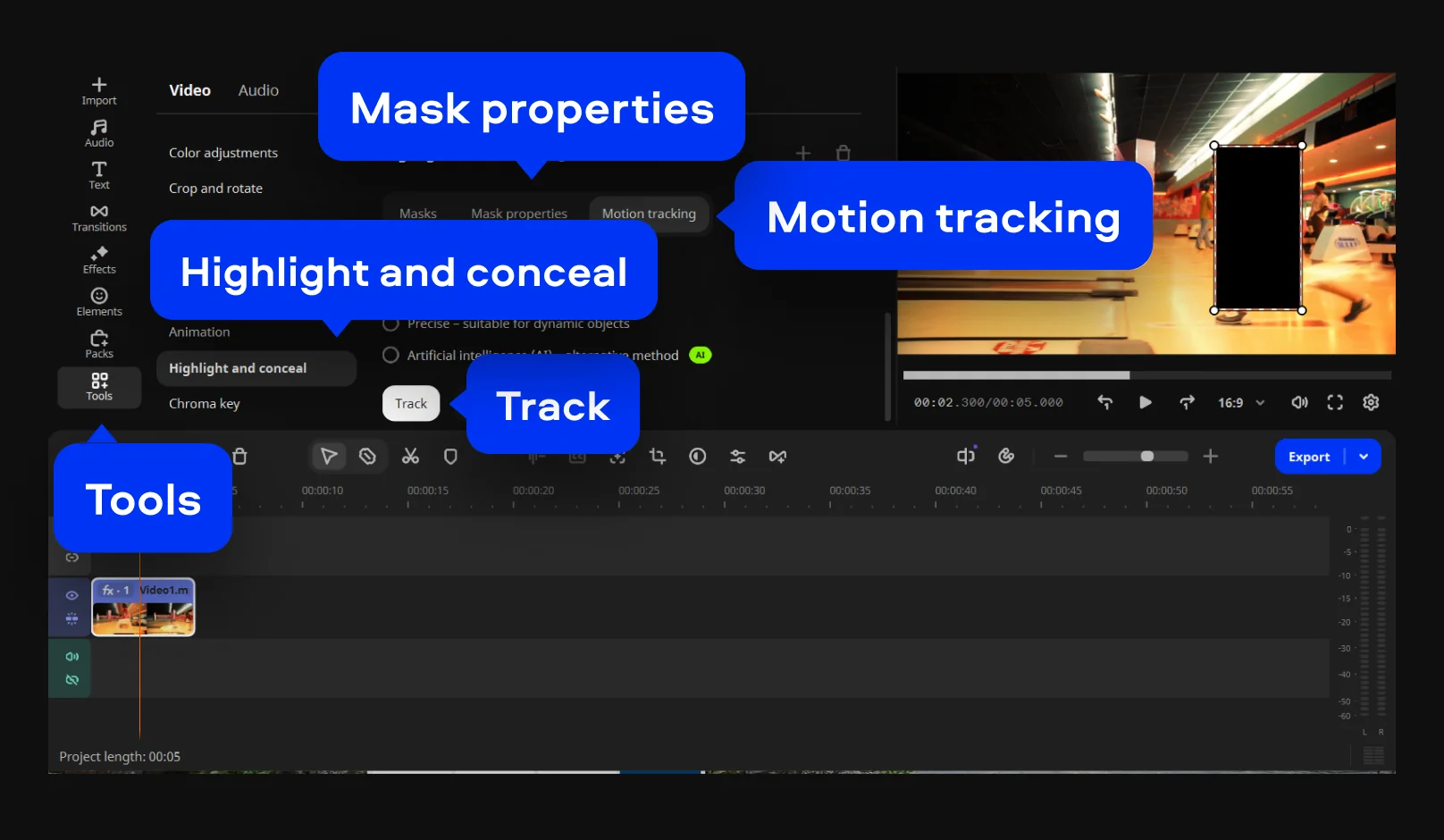
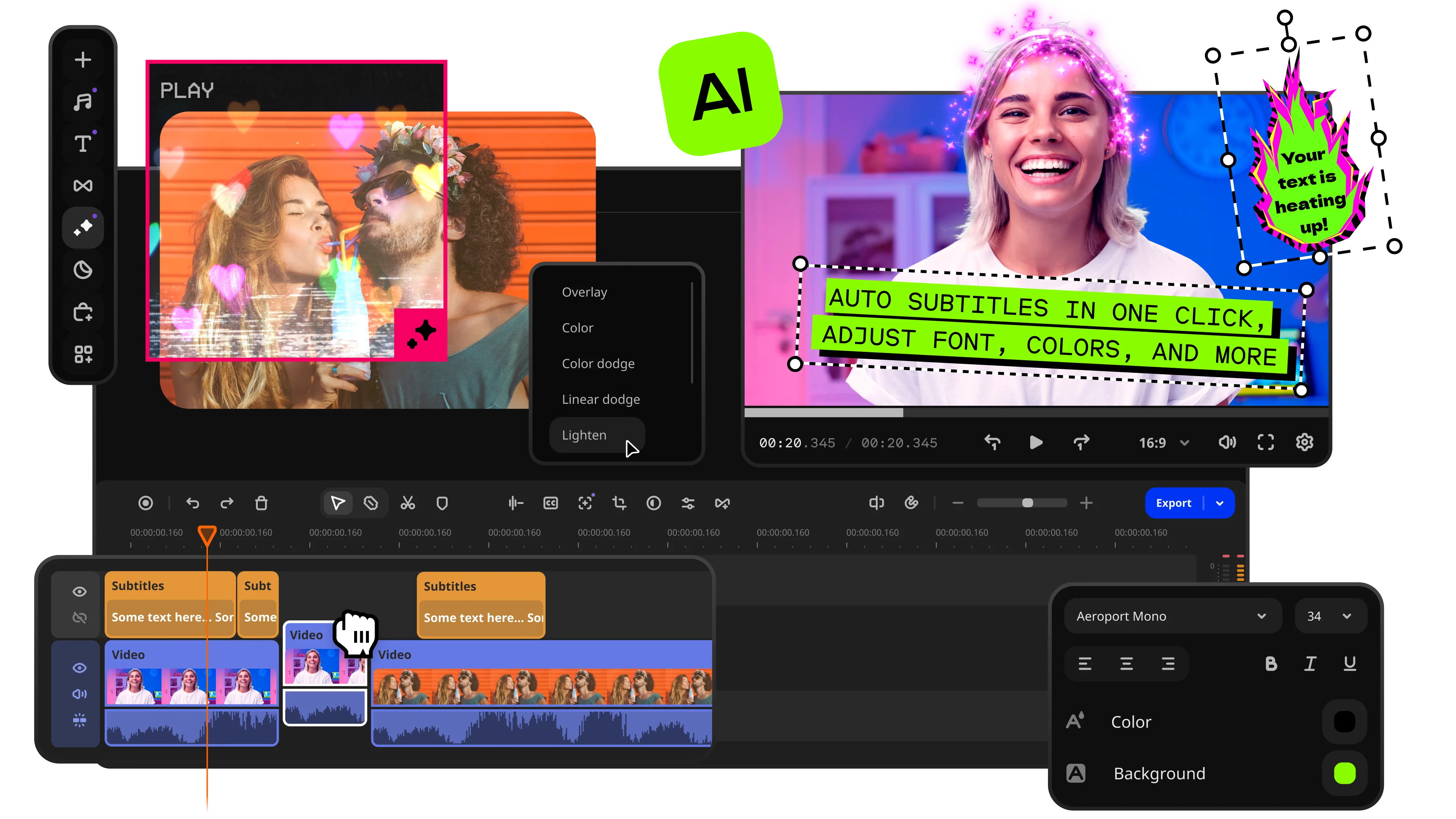
To add a motion tracker for a video, go to Tools and open Highlight and conceal. Choose the mask preset you need and place it over the object or area you want to follow in the frame. After that, open the Mask properties settings to adjust details like feathering and opacity. When the mask is in position, move to the Motion tracking tab so the mask can follow the subject as it moves through the shot.

Step 3. Export the video

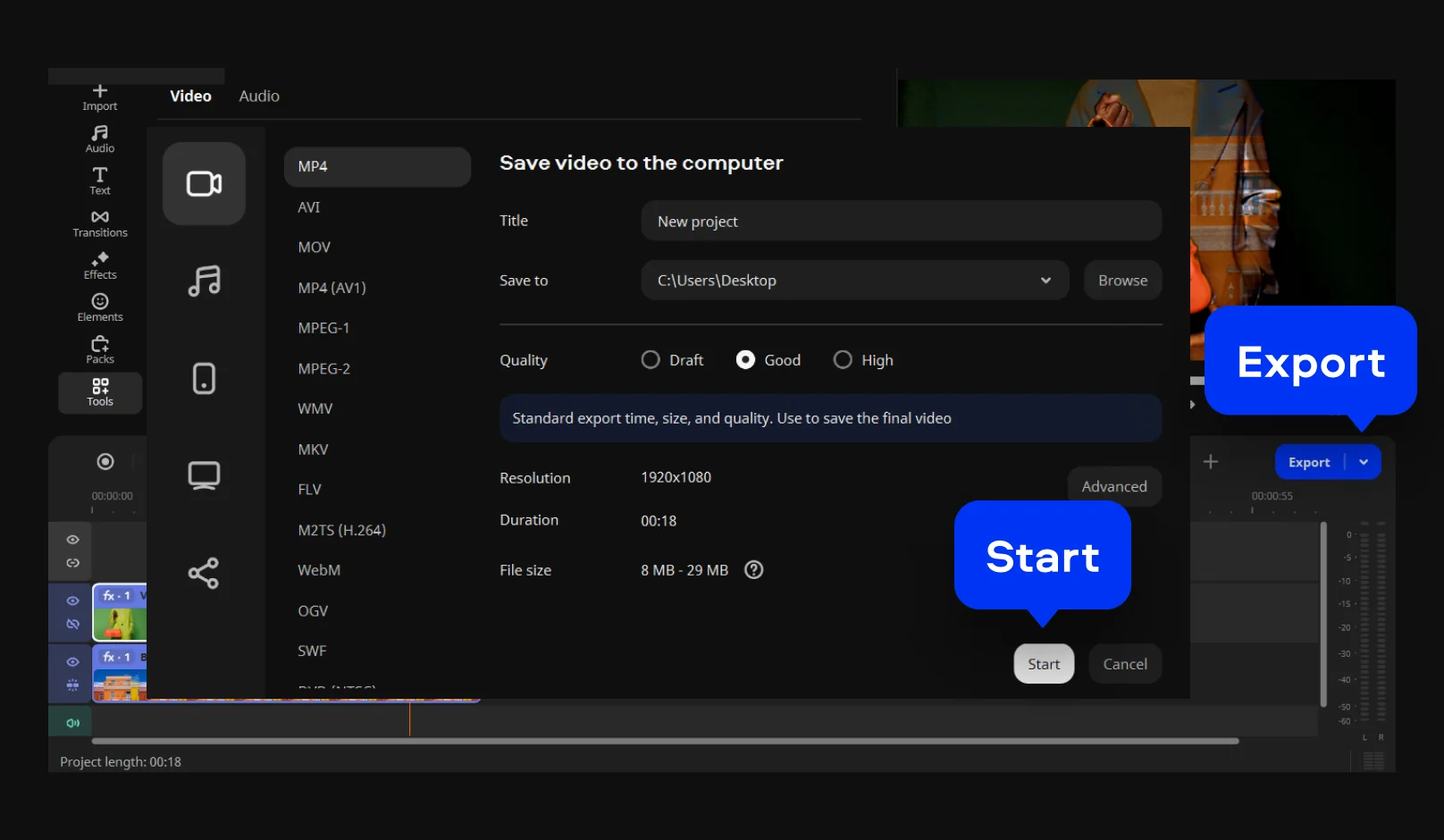
Check how the mask follows the object through the clip and adjust it if needed so the effect stays locked in place. This works especially well for blurring faces, hiding details, or keeping the viewer’s attention on a moving subject. Once everything looks right, click Export, choose your output settings, and hit Start to save the finished video.

Who Uses a Motion Tracking Video Editor

Motion tracking is a practical tool across many different content formats and professional needs.

Content creators and social media editors · CONTENT CREATION

YouTube creators, TikTok editors, and Instagram video producers use motion tracking to attach animated text, branded stickers, and visual effects to moving subjects in their clips. The ability to pin a label or an emoji to a walking person, a moving product, or a gesturing presenter makes short-form content more engaging and visually dynamic without requiring professional VFX skills.

Journalists and documentary makers · JOURNALISM

Reporters and documentary editors who need to protect the identities of interview subjects, bystanders, or sensitive locations use motion tracking to apply a moving blur that stays over the subject's face throughout the shot. Movavi's automated AI tracking makes this task – which in professional broadcast workflows often requires frame-by-frame manual work –achievable in a fraction of the time on a standard laptop.

Educators and tutorial creators · EDUCATION

Teachers producing explainer videos and tutorial creators recording instructional content use motion tracking to attach annotations, arrows, and callout labels to moving elements in their footage. A label that follows a specific component as a presenter demonstrates a process is significantly clearer than a static overlay that loses its reference as the subject moves out from under it.
Frequently asked questions

Common questions about motion tracking software, apps, cameras, and real-time tracking devices.

What is the best motion tracking software?

The best motion tracking software depends on what you need it to do and how much complexity you are willing to manage. For motion tracking video editing – attaching text, effects, or masks to moving objects in a finished video – Movavi Video Editor is the most accessible option: its AI tracking handles object detection automatically, the interface is identical to the rest of the editor, and the result exports directly to any popular format. DaVinci Resolve (free) has one of the most capable tracking engines available and is the professional standard for complex shots, but it requires significantly more learning time. Adobe® After Effects® with its built-in tracker and the Mocha AE plug-in is the broadcast industry standard for motion tracking video editing, though it requires a subscription and a steep learning curve. Blender (free, open-source) includes a powerful camera and object tracker suited to VFX compositing. For most content creators who need reliable motion tracking video editing without a professional VFX background, Movavi delivers the best balance of accuracy, speed, and accessibility.

Which app is best for motion tracking?

The best app for motion tracking video editing on desktop is Movavi Video Editor for beginners and intermediate creators, and DaVinci Resolve or Adobe® After Effects® for professionals working on complex compositing shots. On mobile, CapCut includes AI-powered motion tracking for social media content on iOS and Android – you select the subject and the app tracks it automatically for short clips. KineMaster also supports motion tracking on mobile, with more timeline depth than CapCut for longer edits. For browser-based use, Runway ML offers AI motion tracking and rotoscoping in a browser without installation, though it charges per minute of processed video. For a motion tracking video editor that works offline, processes files locally without size limits, and combines tracking with full video editing in a single app, Movavi Video Editor on desktop remains the most practical all-in-one choice for non-professionals.

What are the best motion tracking cameras?

The cameras most often recommended for footage that needs motion tracking video editing afterwards are ones that shoot at a high frame rate (60fps or above) and provide good subject-to-background contrast, which makes it easier for tracking algorithms to maintain a clean path. Sony ZV-E10 and Sony A6400 are popular among content creators for their native subject-tracking autofocus combined with high-quality video output. GoPro HERO12 and DJI Action 4 are widely used for action and sports footage where tracking faces and moving subjects in post is common. For studio and documentary use, Blackmagic Pocket Cinema Camera 6K provides the colour depth and sharpness that makes tracking easier in a motion tracking video editor. For real-time tracking in live streaming setups – where the camera moves to follow a presenter automatically – pan-tilt-zoom conference cameras like the Obsbot Tiny 4K and Insta360 Link have built-in AI subject tracking that eliminates the need for post-production tracking entirely.

What is the best device for real-time tracking?

For real-time motion tracking – where the tracking happens during recording rather than in a motion tracking video editor after the fact – the most practical consumer devices are AI-powered webcams and auto-framing cameras. The Insta360 Link uses a 4K gimbal camera with AI subject tracking that physically rotates to keep the subject centred in the frame. The Obsbot Tiny 4K offers similar pan-tilt tracking in a compact body suited for desk setups. The DJI OM 6 smartphone gimbal provides real-time tracking for mobile video by stabilising and reframing around a selected subject as it moves. For professional live broadcast, PTZ (pan-tilt-zoom) robotic cameras from manufacturers like Sony and Panasonic include AI tracking that follows presenters across a stage. These real-time tracking devices are complementary to motion tracking video editing software: they handle tracking during capture, while tools like Movavi handle tracking in post for footage where real-time tracking was not available.

Join us for discounts, editing tips, and content ideas

1.5M+ users already subscribed to our newsletter

By signing up, I agree to receive marketing emails from Movavi and agree to Movavi's Privacy Policy.