20 Professional Video Editing Software Options for Desktop in 2026

Edited by
Sam P Dunn
73,086

Professional video editing has become more accessible than ever, with powerful desktop software now available at various price points – including completely free options. Whether you're creating corporate presentations, YouTube content, or feature films, the right professional video editor can transform your raw footage into polished productions.

Key takeaways

For beginners with professional needs: Movavi Video Editor combines advanced features with intuitive design

For open-source enthusiasts: DaVinci Resolve offers Hollywood-grade tools at no cost

For Mac users: Final Cut Pro provides seamless integration with Apple ecosystem

For Windows-focused workflows: Adobe® Premiere® Pro remains the industry standard

For collaborative teams: Frame.io integration in various editors streamlines review processes

Complete list of professional desktop video editing software

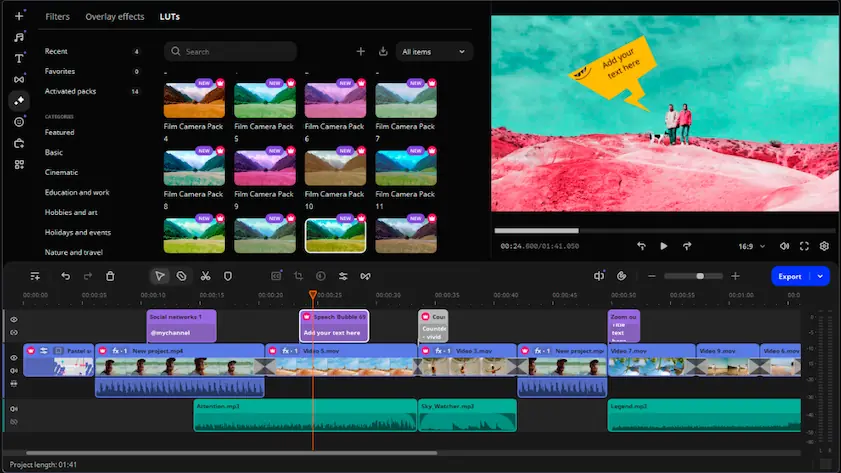
Movavi Video Editor strikes an interesting balance – it's designed for newcomers but packs genuinely professional features under the hood. The timeline supports multi-track editing with precision tools, while AI-powered background removal and motion tracking handle complex compositing tasks automatically.

What sets this desktop video editing software apart is how it handles the learning curve. Advanced color correction tools sit alongside one-click presets. The chroma key module offers professional-grade edge feathering, but you can also just drag and drop for basic green screen work.

The AI toolkit deserves special mention. Background removal works remarkably well on talking head footage – no manual masking required. Motion tracking lets you attach graphics or blur faces with simple clicks. Audio cleanup happens automatically, removing background noise without destroying voice clarity.

Export options cover everything from social media formats to 4K masters. Hardware acceleration through Intel, NVIDIA, and AMD chips keeps rendering times reasonable even on modest systems.

Pros:
  • AI tools automate complex professional techniques

  • Timeline editing feels familiar to experienced editors

  • 4K export with hardware acceleration

  • No subscription required

Cons:
  • Free version includes watermark

  • Limited collaboration features compared to enterprise solutions

  • Some advanced color grading tools missing

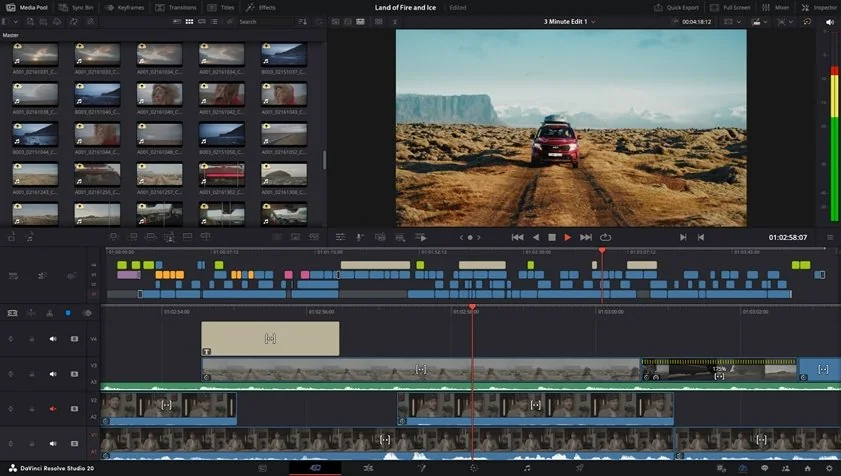
DaVinci Resolve offers professional-grade capabilities that rival software costing thousands of dollars. Originally designed as a high-end color grading system for Hollywood productions, it's evolved into a complete post-production suite.

The free version includes nearly everything: multi-track timeline editing, advanced color correction, audio post-production, and even basic visual effects. The Fairlight audio page provides professional mixing capabilities with full surround sound support.

Learning curve is steep but worthwhile. The node-based color grading system offers unprecedented control over image quality. Cut page provides streamlined editing for quick turnarounds, while Edit page handles complex projects with multiple cameras and audio tracks.
Pros:
  • Hollywood-level color grading tools included free

  • Excellent performance on both Mac and PC

  • Built-in audio post-production suite

  • No watermarks or export limitations in free version

Cons:
  • Requires powerful hardware for smooth operation

  • Interface can overwhelm beginners

  • Advanced features locked behind paid Studio version

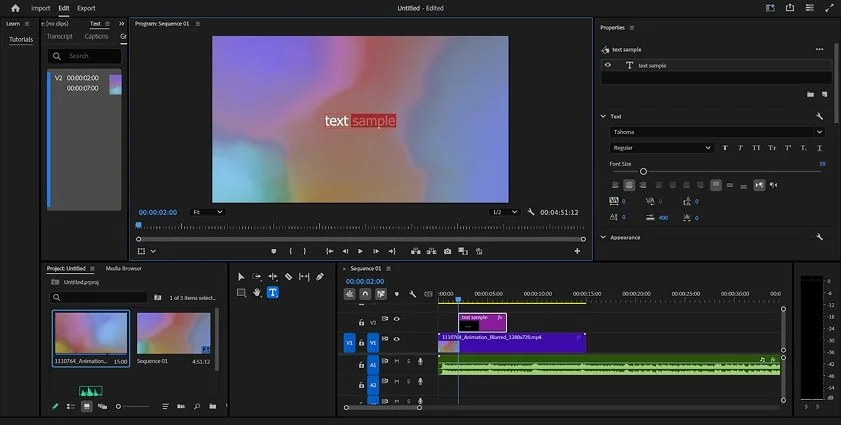
Adobe® Premiere® Pro remains the backbone of many professional video workflows. Monthly subscription grants access to seamless integration with After Effects®, Audition, and Creative Cloud® libraries.

Timeline performance has improved significantly in recent versions. Proxy workflows keep editing smooth even with 4K and 8K footage. Auto Reframe uses AI to crop horizontal videos for vertical social media formats intelligently.

The ecosystem advantage is real. Motion graphics created in After Effects® link dynamically. Audio cleanup in Audition reflects immediately in Premiere®. Color grading tools connect with DaVinci Resolve through round-trip workflows.

Pros:
  • Industry-standard professional video editor

  • Seamless Creative Cloud® integration

  • Excellent proxy workflow for large files

  • Regular updates with new features

Cons:
  • Monthly subscription costs add up quickly

  • Can feel overwhelming for simple projects

  • Requires stable internet connection for full functionality

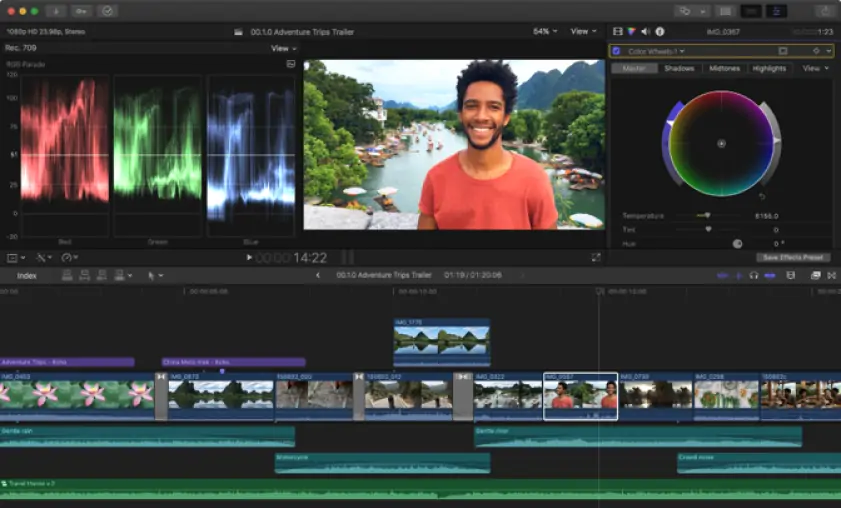
Final Cut Pro takes a different approach to professional video editing software. Apple's magnetic timeline eliminates track-based editing entirely – clips automatically move to avoid conflicts.

Performance on Apple Silicon Macs is exceptional. 4K editing feels responsive even on base model MacBook Airs. ProRes and ProRAW support provides professional codec handling without third-party plugins.

The interface feels distinctly Mac-like. Library organization, color coding, and keyword tagging make media management intuitive. Built-in effects and transitions look polished without additional purchases.

Pros:
  • Magnetic timeline prevents common editing mistakes

  • Exceptional performance on Apple hardware

  • One-time purchase, no subscription

  • Excellent media management tools

Cons:
  • Mac-only limits cross-platform workflows

  • Magnetic timeline confuses editors from other systems

  • Limited third-party plugin ecosystem

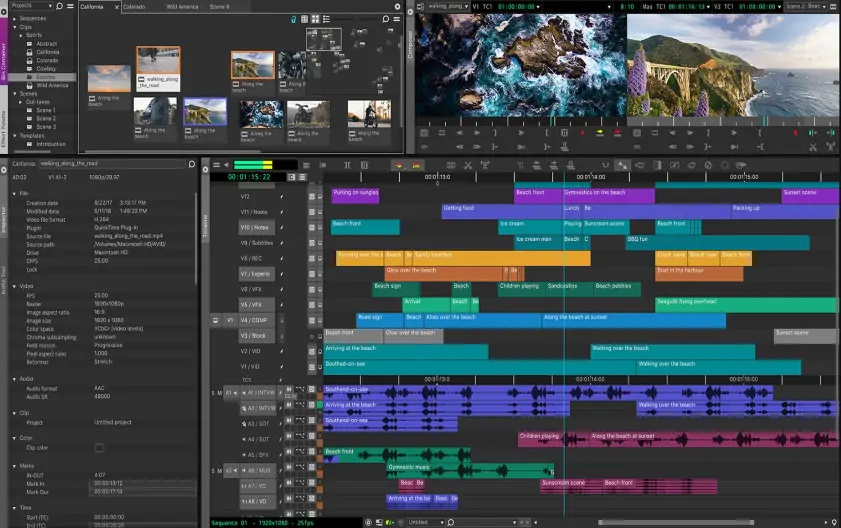
Avid Media Composer built its reputation in professional broadcast and film environments. The software prioritizes stability and precision over flashy features – exactly what long-form projects demand.

Bin-based media management handles thousands of clips without breaking down. Advanced trimming tools provide frame-accurate control that other editors struggle to match. The three-point editing system speeds up assembly cuts significantly.

Collaboration features shine in team environments. Shared projects, version control, and role-based permissions keep complex productions organized. Media sharing across multiple edit bays happens seamlessly.

Pros:
  • Rock-solid stability for long projects

  • Industry-leading collaboration tools

  • Precise trimming and assembly editing

  • Extensive keyboard customization

Cons:
  • Interface feels dated compared to modern alternatives

  • Steep learning curve for newcomers

  • Subscription pricing for full feature set

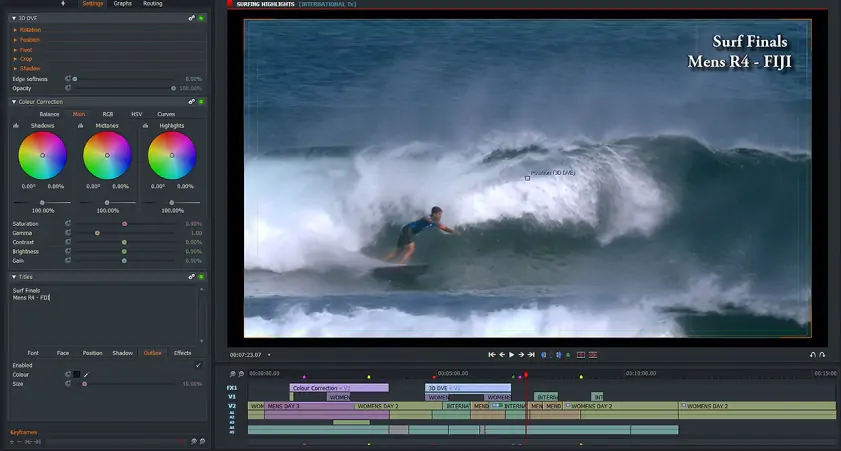
Lightworks brings decades of professional editing experience to both free and paid tiers. The free version imposes export limitations but includes the complete editing toolset used on major Hollywood films.

Real-time effects processing keeps playback smooth during complex compositing. The Boris FX integration provides professional-grade titles and effects. Multi-camera editing handles dozens of synchronized angles without performance drops.

Timeline customization goes deep. Track layouts, keyboard shortcuts, and interface panels adapt to individual workflows. The learning curve rewards patience with exceptional efficiency once mastered.

Pros:
  • Free version includes professional editing tools

  • Excellent real-time effects performance

  • Highly customizable interface and shortcuts

  • Long track record in professional productions

Cons:
  • Free version limited to 720p YouTube export

  • Interface design feels complex for beginners

  • Smaller user community compared to major alternatives

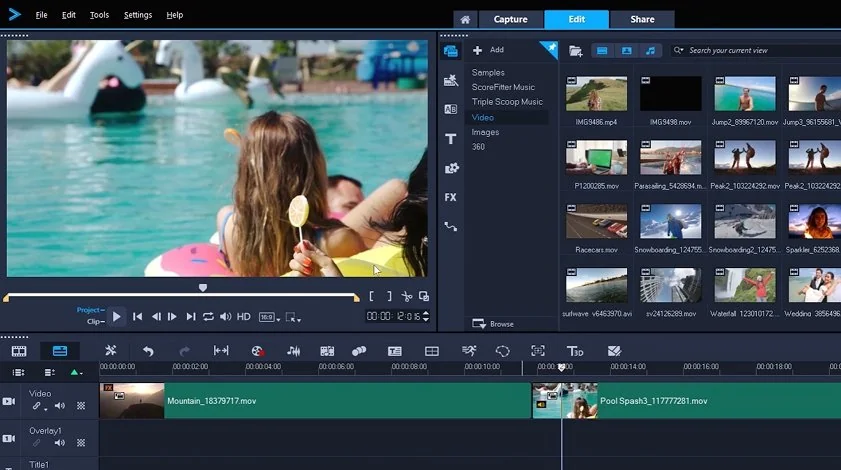
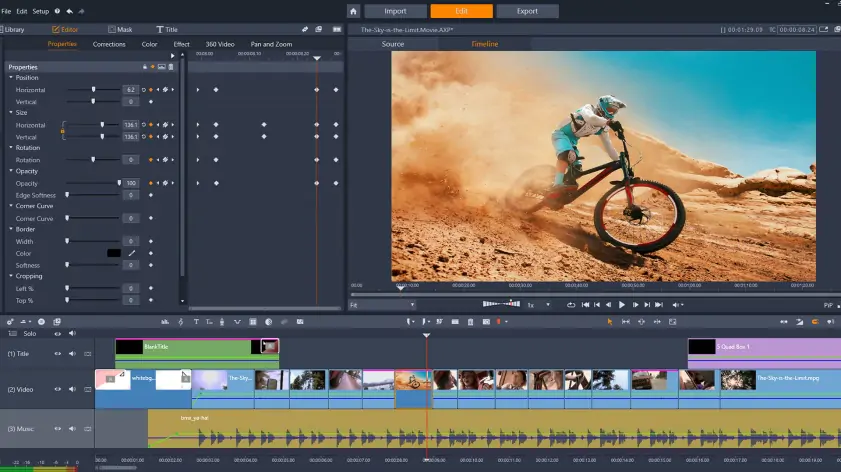
Corel VideoStudio targets enthusiast creators who want professional results without professional complexity. The interface strikes a middle ground between consumer simplicity and professional control.

Multi-camera editing supports up to six angles with automatic sync. Motion tracking follows objects through scenes for graphics placement or privacy blurring. 360-degree video editing handles VR content with specialized tools.

Template-based workflows speed up common tasks. Title animations, color grades, and effect combinations save as reusable presets. The timeline remains accessible to newcomers while offering advanced features when needed.

Pros:
  • Beginner-friendly interface with professional features

  • Good selection of templates and presets

  • 360-degree video editing capabilities

  • Reasonable one-time purchase price

Cons:
  • Windows-only limits cross-platform use

  • Performance lags behind competitors on large projects

  • Limited third-party plugin support

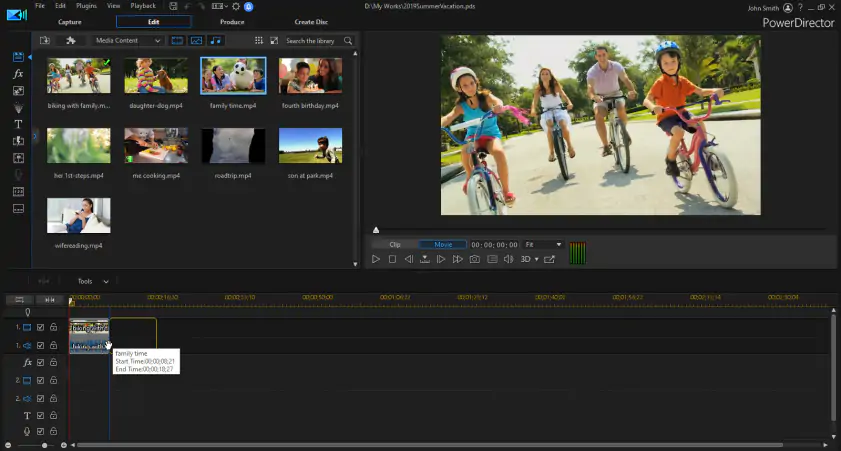
CyberLink PowerDirector emphasizes speed and ease of use while maintaining professional capabilities. AI-powered features automate time-consuming tasks like audio cleanup and color matching.

The timeline design accommodates both beginners and advanced users. Express mode provides templates and automated editing, while full timeline mode offers complete control. Particle effects, motion graphics, and green screen tools handle professional requirements.

Performance stands out even on modest hardware. Smart rendering skips re-encoding unchanged sections. GPU acceleration through multiple APIs keeps effects processing smooth.

Pros:
  • AI features speed up common editing tasks

  • Good performance on lower-end hardware

  • Comprehensive effects and transitions library

  • Regular updates with new features

Cons:
  • Interface design feels consumer-focused

  • Subscription model for latest features

  • Limited professional format support

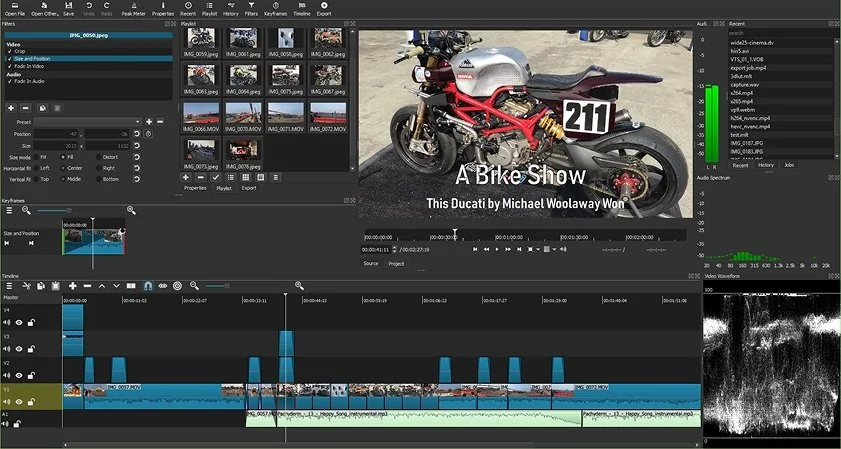
Shotcut provides open-source professional video editing software without cost or licensing restrictions. The interface appears complex initially but offers remarkable depth once learned.

Format support covers virtually everything – from ancient codecs to cutting-edge standards. Color correction tools include vectorscope and histogram displays. Audio editing provides multi-track mixing with real-time effects.

Being open-source means continuous development by a global community. Regular updates add features and fix issues. No vendor lock-in allows complete control over your editing environment.

Pros:
  • Completely free with no restrictions

  • Excellent format compatibility

  • Regular updates from active development

  • No watermarks or export limitations

Cons:
  • Interface learning curve discourages beginners

  • Limited official support options

  • Some advanced features require technical knowledge

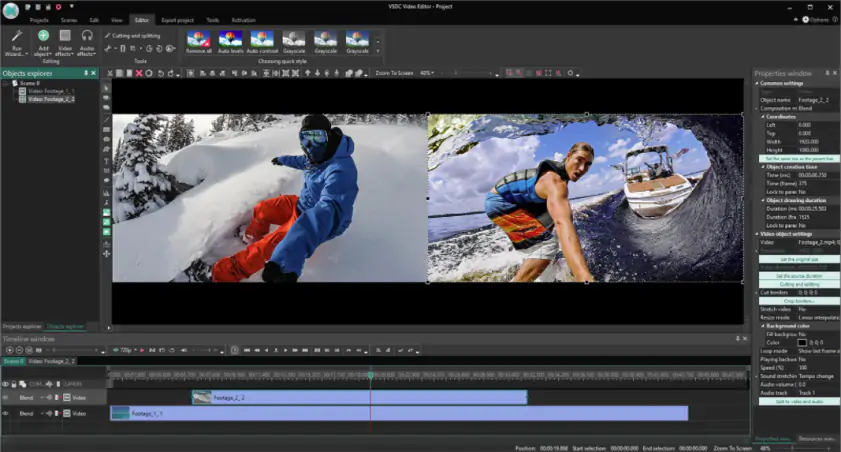
VSDC offers professional-grade tools through a unique non-linear editing approach. Instead of traditional track-based timelines, objects exist independently with their own parameters and effects.

The free version includes surprisingly advanced features. Chroma key, masking, and color correction rival paid alternatives. Audio waveform editing provides precise control over soundtracks and effects.

Visual effects capabilities extend beyond basic editing. Particle systems, lens flares, and distortion effects create professional-looking results. Export options include 4K resolution without watermarks.

Pros:
  • Advanced features available in free version

  • Unique object-based editing approach

  • No watermarks on exported videos

  • Comprehensive visual effects suite

Cons:
  • Non-standard interface confuses traditional editors

  • Windows-only limits platform choice

  • Learning resources less comprehensive than major alternatives

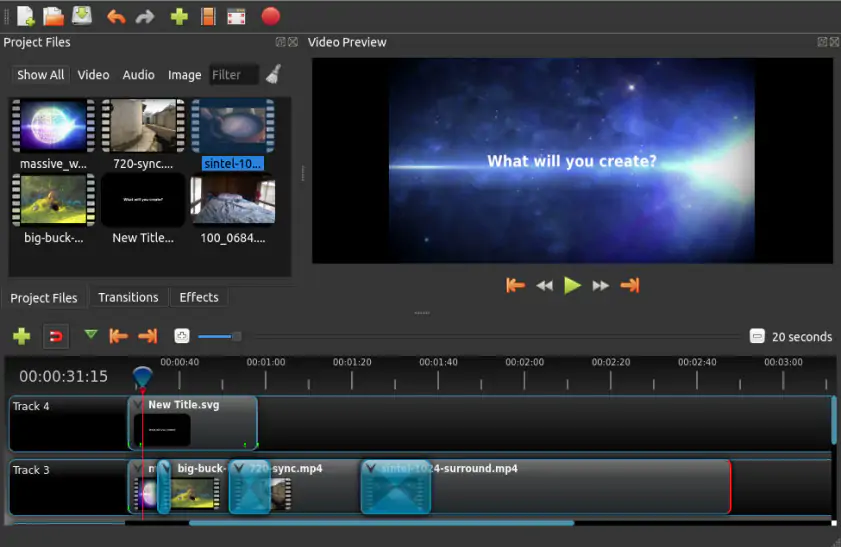
OpenShot prioritizes accessibility while maintaining professional capabilities. The open-source foundation ensures free access to all features without restrictions or watermarks.

Cross-platform compatibility covers Windows, Mac, and Linux systems. The timeline design accommodates unlimited tracks for complex projects. 3D animation support adds titles and effects with professional polish.

Community-driven development responds to user needs quickly. Regular updates improve performance and add requested features. Documentation and tutorials help newcomers overcome the initial learning curve.

Pros:
  • Free and open-source with full feature access

  • Cross-platform compatibility

  • User-friendly interface design

  • Active community support

Cons:
  • Performance issues with very large projects

  • Limited advanced color correction tools

  • Fewer built-in effects than commercial alternatives

Pinnacle Studio offers tiered professional video editing software options from basic to advanced. The interface design emphasizes visual clarity and logical workflow organization.

Multi-camera editing synchronizes footage automatically using audio waveforms. Color grading tools provide both automatic correction and manual control. Motion tracking follows objects for graphics placement or effect application.

Template-based creation speeds up common projects. Title animations, transitions, and effect combinations save time on repetitive tasks. Export presets optimize videos for specific platforms and devices.

Pros:
  • Clear interface design aids learning

  • Good selection of templates and presets

  • Solid multi-camera editing capabilities

  • Reasonable pricing tiers

Cons:
  • Windows-only limits cross-platform workflows

  • Performance can struggle with 4K footage

  • Fewer advanced features than top-tier competitors

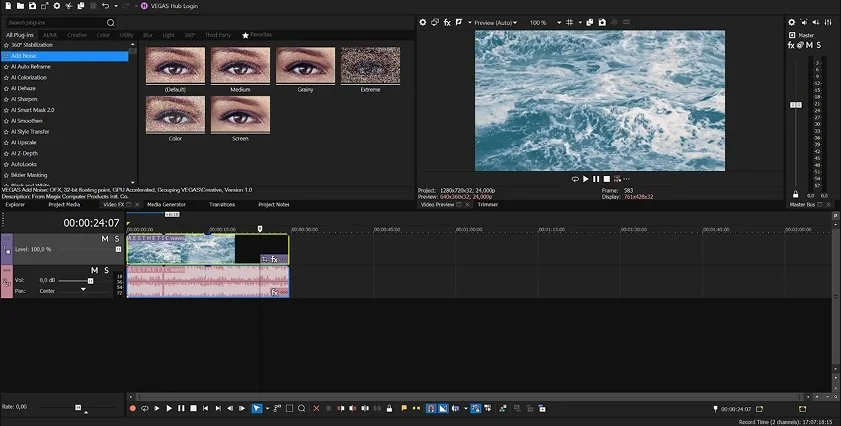
Vegas Pro takes an audio-first approach to video editing, reflecting its origins in digital audio workstation software. This foundation creates exceptional audio editing capabilities within the video timeline.

Event-based editing allows clips to exist independently of tracks. Nested timelines keep complex projects organized. Real-time effects processing maintains smooth playback during intensive compositing work.

Professional format support includes RED, Sony, and Panasonic camera formats. Color grading tools provide broadcast-safe monitoring. Audio editing rivals dedicated audio applications with full mixing console interfaces.

Pros:
  • Exceptional audio editing capabilities

  • Event-based editing offers unique flexibility

  • Strong professional camera format support

  • No subscription required

Cons:
  • Windows-only limits platform choices

  • Interface feels dated compared to modern alternatives

  • Steeper learning curve for video-focused editors

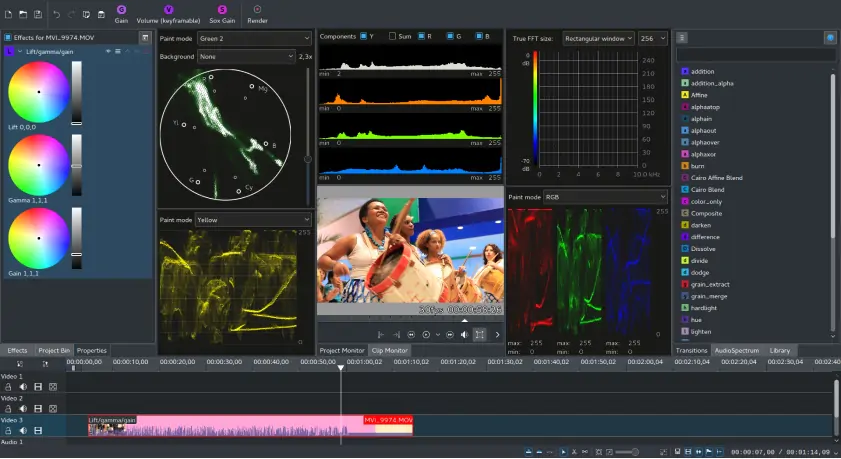
Kdenlive represents serious open-source professional video editing software development. Built on the MLT framework, it provides stability and performance that rivals commercial alternatives.

Multi-track timeline editing supports unlimited video and audio tracks. Keyframe animation controls effects parameters over time. Proxy editing keeps projects responsive when working with high-resolution footage.

Professional features include vectorscope and waveform monitoring for broadcast compliance. Color correction tools provide three-way color wheels and curve controls. Audio editing includes real-time effects and multi-channel mixing.

Pros:
  • Professional features in free open-source package

  • Cross-platform compatibility

  • Proxy editing for smooth performance

  • Regular development updates

Cons:
  • Interface complexity discourages casual users

  • Smaller community compared to major alternatives

  • Some advanced features require technical knowledge

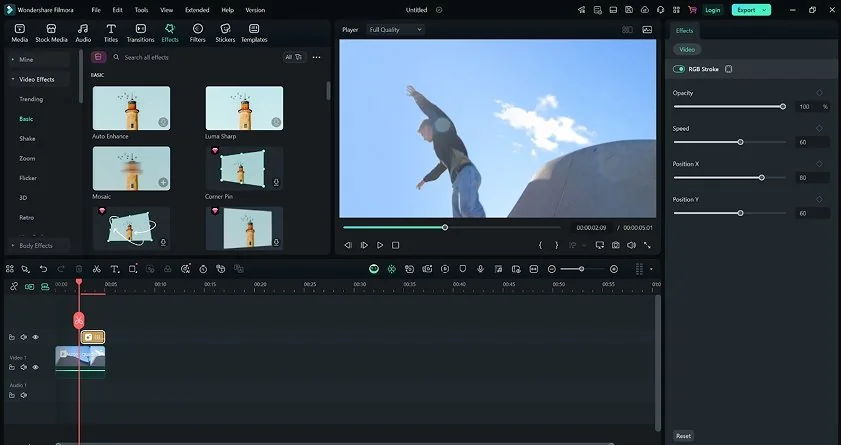
Filmora bridges consumer simplicity with professional capabilities through an approachable interface design. Recent versions added advanced features while maintaining ease of use.

AI-powered tools automate complex tasks. Audio ducking adjusts background music levels automatically. Motion tracking follows objects for graphics or privacy blurring. Color matching ensures consistent looks across different camera sources.

Effects library includes professional-grade options alongside creative filters. Green screen removal provides edge refinement controls. Title animation templates create polished graphics without design experience.

Pros:
  • Beginner-friendly interface with professional tools

  • AI features simplify complex editing tasks

  • Regular updates with new effects and features

  • Good performance on modest hardware

Cons:
  • Subscription model for continuous updates

  • Advanced features limited compared to professional suites

  • Watermark on free version exports

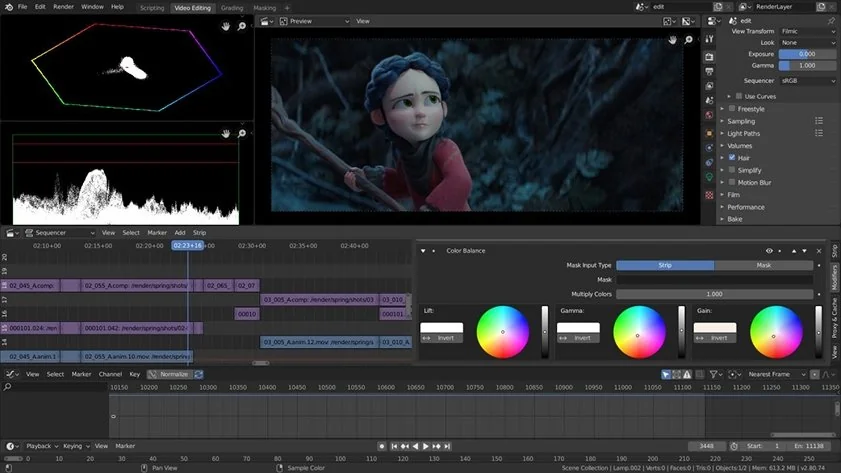
Blender includes professional video editing capabilities within its comprehensive 3D creation suite. The Video Sequence Editor provides multi-track timeline editing with effects and transitions.

Integration with Blender's 3D tools creates unique possibilities. Motion graphics, particle effects, and 3D compositing happen within the same application. Rendering engines provide cinematic quality output.

Being completely free removes budget constraints from creative projects. Open-source development ensures continued evolution. Large community provides tutorials, plugins, and support resources.

Pros:
  • Free professional-grade video editor included

  • Unique 3D integration capabilities

  • Powerful rendering and compositing tools

  • Large active community

Cons:
  • Complex interface overwhelms video-only users

  • Learning curve extremely steep for beginners

  • Video editing feels secondary to 3D features

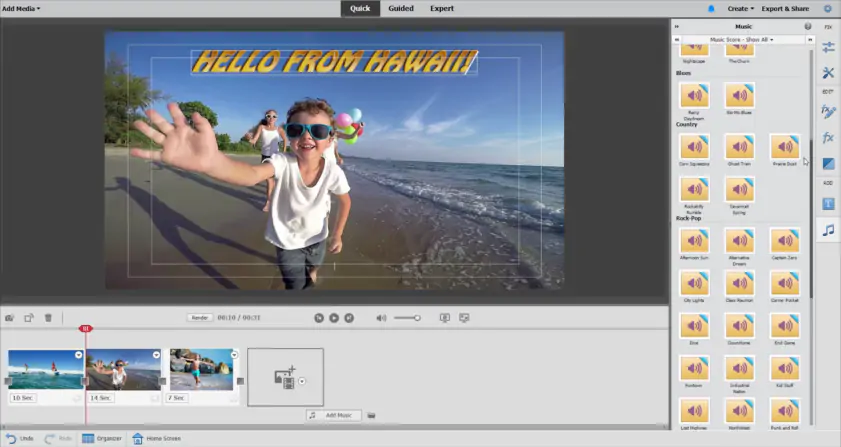
Adobe® Premiere® Elements simplifies professional video editing software concepts for consumer use. Automated features handle technical details while preserving creative control.

Guided edits walk users through complex techniques step-by-step. Auto Reframe crops videos for different aspect ratios intelligently. Audio cleanup removes background noise automatically while preserving dialogue clarity.

Elements Organizer manages media files with AI-powered tagging and search. Timeline editing supports multiple tracks with professional transitions and effects. Export options optimize videos for various platforms and devices.

Pros:
  • Simplified interface makes advanced features accessible

  • AI automation handles technical complexities

  • One-time purchase model

  • Good integration with other Adobe Elements products

Cons:
  • Limited advanced features compared to Premiere Pro

  • Windows and Mac only, no mobile versions

  • Fewer third-party plugins available

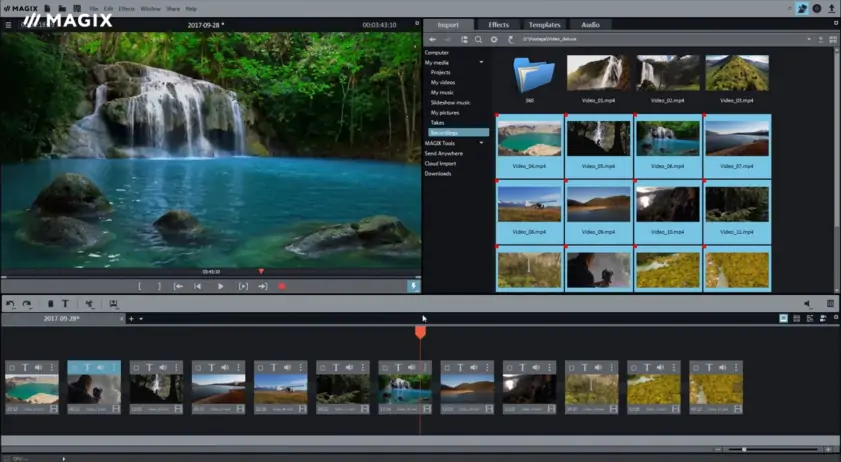
Magix Movie Edit Pro offers German-engineered precision in desktop video editing software design. The interface emphasizes logical workflow and efficient media management.

Template-based creation accelerates common projects through pre-designed structures. Multi-camera editing handles synchronized footage from multiple angles. Color correction includes automatic enhancement and manual controls.

Audio editing capabilities extend beyond basic mixing. Surround sound support, audio restoration, and soundtrack creation provide professional results. Export optimization targets specific platforms and devices automatically.

Pros:
  • Well-designed interface aids productivity

  • Strong audio editing capabilities

  • Good template and preset selection

  • Reasonable one-time purchase pricing

Cons:
  • Windows-only limits cross-platform use

  • Smaller user community and resource base

  • Performance lags with very large 4K projects

19. iMovie

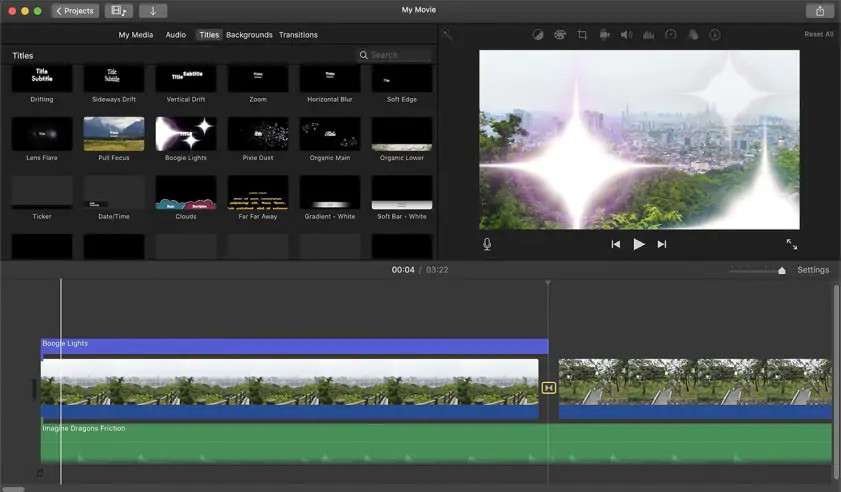
iMovie transforms casual footage into polished productions through Apple's signature simplicity. Professional features hide behind intuitive controls that beginners master quickly.

Magnetic Timeline prevents common editing mistakes by automatically avoiding clip conflicts. Color balance and audio enhancement happen automatically with manual override options available. 4K editing performs smoothly even on entry-level Macs.

Built-in music, sound effects, and titles provide professional polish without additional purchases. Trailer templates create Hollywood-style previews from raw footage. AirDrop sharing moves projects between devices seamlessly.

Pros:
  • Exceptional ease of use for beginners

  • Free with all Mac computers

  • Smooth 4K editing performance

  • Excellent automatic audio and color enhancement

Cons:
  • Mac and iOS only, no Windows version

  • Limited advanced features for professional work

  • Cannot add third-party plugins or extensions

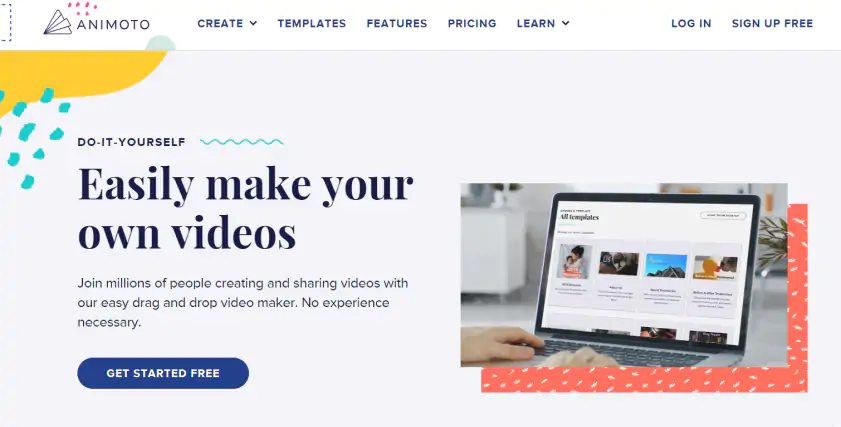
Animoto specializes in template-driven video creation with professional results. Web-based operation eliminates software installation while providing desktop-quality output.

Template library covers business, social media, and personal video needs. Drag-and-drop editing makes complex projects accessible to non-technical users. Brand customization maintains consistency across multiple videos.

Cloud-based workflow enables collaboration and access from any device. Stock media library provides professional photos, videos, and music. Export options optimize videos for specific social media platforms automatically.

Pros:
  • No software installation required

  • Professional templates speed up creation

  • Cloud-based collaboration features

  • Automatic social media optimization

Cons:
  • Template-based approach limits creative flexibility

  • Subscription required for full features

  • Limited timeline editing compared to traditional software

  • Requires stable internet connection

Professional video editor comparison matrix

Software

Best for

Price

Learning curve

Platform

AI-powered editing

One-time purchase

Easy

Windows, Mac

Color grading

Free/paid

Steep

Windows, Mac, Linux

Professional workflows

Subscription

Moderate

Windows, Mac

Mac users

One-time purchase

Moderate

Mac only

Broadcast/film

Subscription

Steep

Windows, Mac

Choosing the right professional video editing software

Quick project turnarounds: Movavi Video Editor's AI tools automate time-consuming tasks like background removal and audio cleanup, letting you focus on storytelling rather than technical details.

Color-critical work: DaVinci Resolve provides Hollywood-grade color correction tools that cost nothing but learning time. The node-based approach offers unprecedented control over image quality.

Team collaborations: Adobe® Premiere® Pro's Creative Cloud® integration streamlines multi-person workflows. Shared libraries, version control, and seamless handoffs between applications keep complex projects organized.

Mac-focused workflows: Final Cut Pro leverages Apple's hardware advantages for exceptional performance. The magnetic timeline prevents common editing mistakes while maintaining professional capabilities.

The hardware requirements matter more than marketing claims. Test software with your actual footage and system configuration. What runs smoothly on a developer's high-end workstation might crawl on your laptop.

Most professional video editing software offers trial periods. Use them. Import your typical project files, test the features you need most, and evaluate performance under real conditions. The best choice depends entirely on your specific requirements and working style.

Frequently asked questions

What makes video editing software "professional"?

Professional video editing software typically includes multi-track timeline editing, advanced color correction, audio mixing capabilities, support for high-resolution formats, and collaboration features. The distinction often lies in precision tools, format support, and workflow efficiency rather than just feature quantity.

Can free professional video editing software match paid alternatives?

Yes, in many cases. DaVinci Resolve offers Hollywood-grade features at no cost, while Shotcut and Kdenlive provide comprehensive editing tools through open-source development. The main limitations usually involve support options and some advanced features rather than core editing capabilities.

How much computer power do I need for professional video editing?

Minimum requirements include 16GB RAM, dedicated graphics card, and fast storage (SSD preferred). For 4K editing, consider 32GB RAM and powerful GPU. However, software optimization varies significantly – some editors perform better on modest hardware than others.

Should I choose subscription or one-time purchase software?

One-time purchases offer predictable costs but may lack continuous updates. Subscriptions provide latest features and ongoing support but create recurring expenses. Consider your budget timeline and feature update frequency needs when deciding.

What file formats should professional video editing software support?

Essential formats include MP4, MOV, AVI, and MKV for editing. Professional workflows often require ProRes, DNxHD, and camera-specific formats like RED or Sony RAW. Audio format support should include WAV, MP3, and professional formats like BWF.

Can I switch between different professional video editing software easily?

Project portability varies significantly between applications. Some support industry-standard formats like AAF or XML for basic project transfer, while others use proprietary formats. Plan migration carefully and consider maintaining project archives in universal formats when possible.

Have questions?
If you can’t find the answer to your question, please feel free to contact our Support Team.
Join us for discounts, editing tips, and content ideas

1.5M+ users already subscribed to our newsletter

By signing up, I agree to receive marketing emails from Movavi and agree to Movavi's Privacy Policy.