5 KineMaster for PC Alternatives: Download Options for Windows 10/11 in 2026

Edited by
Shafin Tech
34,234

Key takeaways:

  • KineMaster has no native Windows version – you need an Android emulator or desktop alternative
  • BlueStacks lets you run KineMaster on PC, but performance varies with your hardware specs
  • Desktop alternatives like Movavi Video Editor offer better performance and PC-optimized workflows
  • Free options exist, though most have watermarks or feature limitations in trial versions
  • Consider your editing complexity: simple cuts vs. multi-layer projects need different tools

KineMaster works great on mobile, but desktop editing is a different beast entirely. The official app doesn't exist for Windows 10 or Windows 11, leaving you with two paths: run the mobile version through an emulator, or switch to a proper desktop video editor.

Here's the reality. Emulators work, but they're basically running a phone inside your computer. Performance takes a hit, and the mobile interface wasn't designed for mouse and keyboard. Desktop alternatives, on the other hand, are built for bigger screens and longer editing sessions.

Can you download KineMaster for PC without BlueStacks?

Short answer: not officially. KineMaster doesn't release a standalone Windows installer, so any "direct download" sites are either hosting modified versions (which I'd avoid) or bundling the app with an emulator anyway.

Your legitimate options for getting kinemaster for windows:

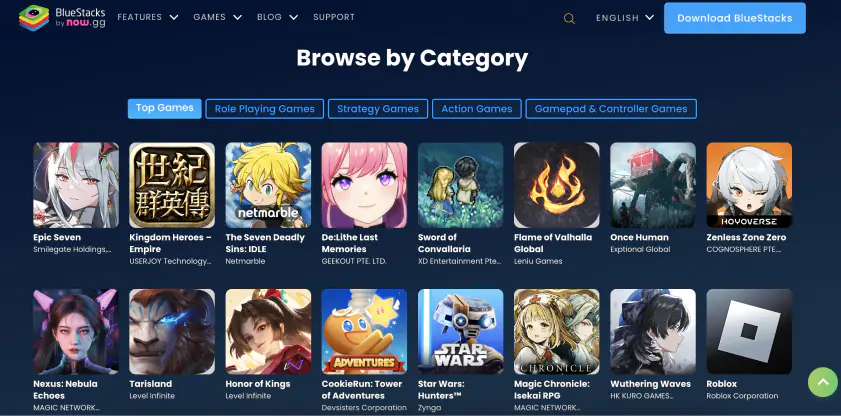
BlueStacks route: Download BlueStacks, install it, then grab KineMaster from the Google Play Store within the emulator. Takes about 15 minutes total, assuming decent internet speed.

Alternative emulators: NoxPlayer and LDPlayer also work, though BlueStacks tends to be the most stable for video editing apps.

64-bit compatibility: All major emulators now support 64-bit Windows systems, so that's not a concern on modern PCs.

The bigger question is whether you should bother. Mobile apps on desktop feel clunky – tiny buttons, awkward navigation, limited file management. Plus, rendering a 1080p video through an emulator layer adds unnecessary processing overhead.

5 best desktop alternatives to KineMaster

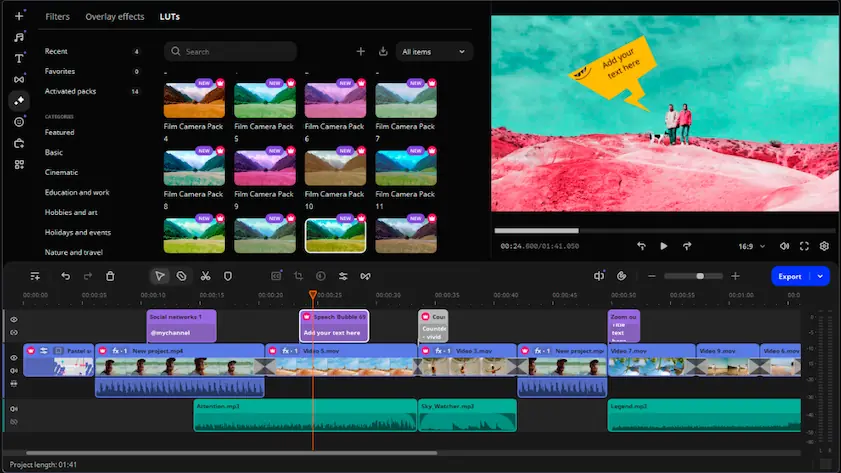
Movavi Video Editor bridges the gap between mobile-simple and desktop-powerful. The interface feels familiar if you're coming from KineMaster – drag clips to timeline, trim with precision, add effects without hunting through endless menus.

What sets it apart is the AI stuff. Auto-subtitles that actually work, background removal without green screens, noise reduction that doesn't kill your audio quality. The motion tracking feature lets you stick text or graphics to moving objects, which is surprisingly useful for product demos or sports clips.

Recent updates added silence removal – the software automatically cuts out dead air from recordings. Handy for podcast-style content or lengthy tutorials where you pause to think.

The effects library is solid. Not overwhelming like some pro tools, but enough variety to keep your content fresh. Color correction presets work well for quick fixes, though you can dive into manual adjustments if needed.
Pros:
  • AI-powered features save significant editing time

  • Intuitive interface with minimal learning curve

  • Supports 4K editing and wide format compatibility

  • One-click silence removal for cleaner audio

Cons:
  • Free trial adds watermark to exported videos

  • Advanced features require paid version

  • No built-in screen recording functionality

  • Limited multi-cam editing options compared to pro tools

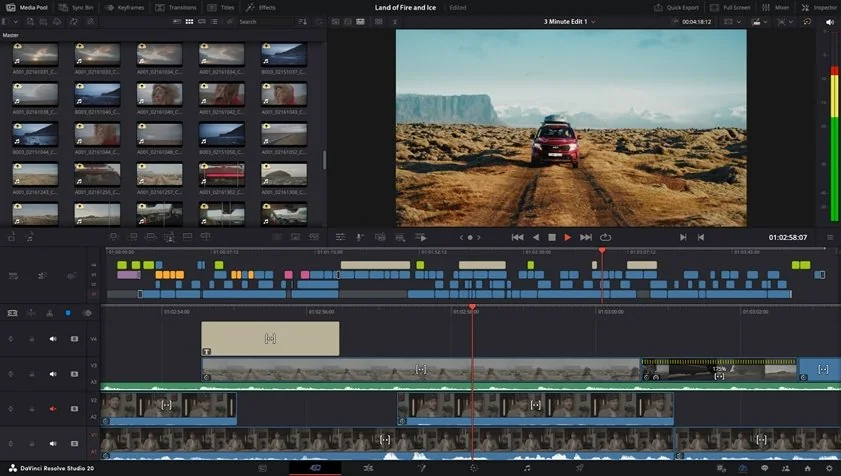
DaVinci Resolve is the heavyweight that happens to be free. Professional colorists use this for Hollywood films, but the basic editing tools work fine for YouTube content too.

The learning curve is steep, no sugar-coating that. But once you get comfortable, the feature set is ridiculous. Advanced color grading, multi-camera sync, Fairlight audio post-production, even basic VFX compositing. All without paying a cent.

Performance depends heavily on your hardware. The software loves GPU acceleration, so integrated graphics will struggle. But with a decent graphics card, it handles 4K footage smoothly.

The free version has some limitations – no collaboration features, capped at 60fps export, missing a few advanced effects. For most solo creators, these restrictions won't matter.

Pros:
  • Completely free with professional-grade tools

  • Industry-standard color correction capabilities

  • Multi-camera editing with automatic sync

  • Regular updates with new features

Cons:
  • Steep learning curve for beginners

  • Requires powerful hardware for smooth performance

  • Interface can be overwhelming initially

  • Limited customer support for free version

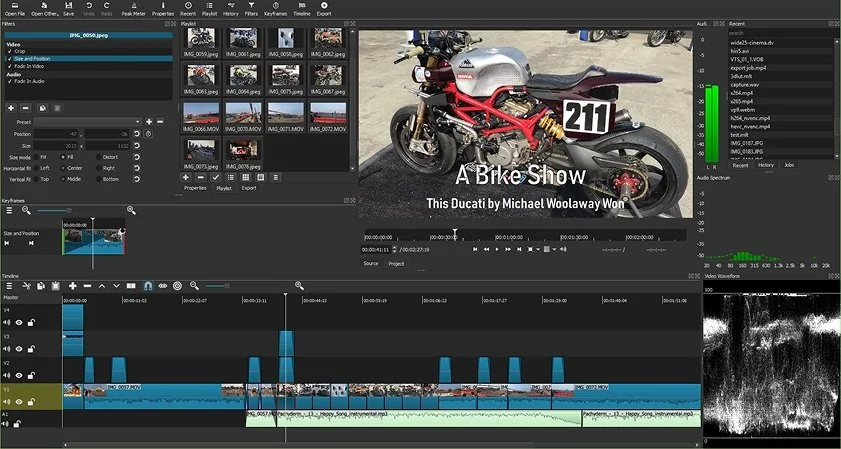
Open-source video editing that doesn't look like it was designed in 2003. Shotcut has a modern interface and handles most common editing tasks without fuss.

The timeline works intuitively – drag, drop, trim, split. No weird quirks or hidden menus. Format support is excellent thanks to FFmpeg under the hood. Pretty much any video file you throw at it will work.

Effects selection is decent for free software. Color correction, transitions, audio filters – the basics are covered. Not as polished as paid alternatives, but functional.

Being open-source means frequent updates, but also occasional bugs. The community is active though, so fixes come relatively quickly.

Pros:
  • Completely free with no watermarks

  • Wide format support including 4K

  • Regular updates from active development community

  • No registration or account creation required

Cons:
  • Occasional stability issues with complex projects

  • Limited built-in effects compared to commercial options

  • Steeper learning curve than beginner-friendly alternatives

  • No official customer support

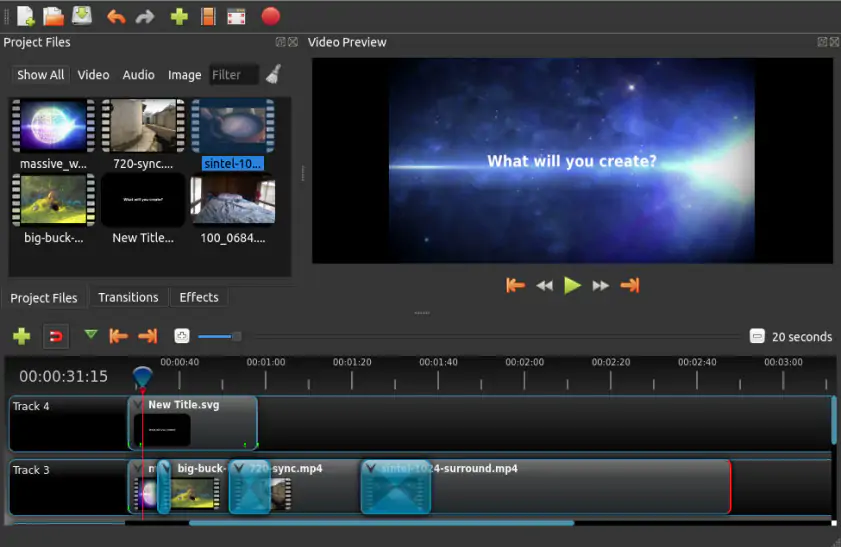
OpenShot aims for simplicity above all else. The interface is clean, the workflow is straightforward, and most features have obvious icons.

Perfect for basic cuts, transitions, and title overlays. The 3D animations are surprisingly good for free software – text that flies in from different angles, smooth transitions between clips.

Export options cover the basics. YouTube presets, various quality settings, batch processing for multiple files. Nothing fancy, but it works.

The main limitation is performance with larger projects. Complex timelines can get sluggish, and the software occasionally crashes with demanding footage. But for shorter videos with simple edits, it's reliable.

Pros:
  • Very intuitive interface for beginners

  • Good selection of 3D animated titles

  • Cross-platform compatibility (Windows, Mac, Linux)

  • No restrictions on export length or quality

Cons:
  • Can be unstable with large or complex projects

  • Limited advanced editing features

  • Slower rendering compared to alternatives

  • Basic color correction tools only

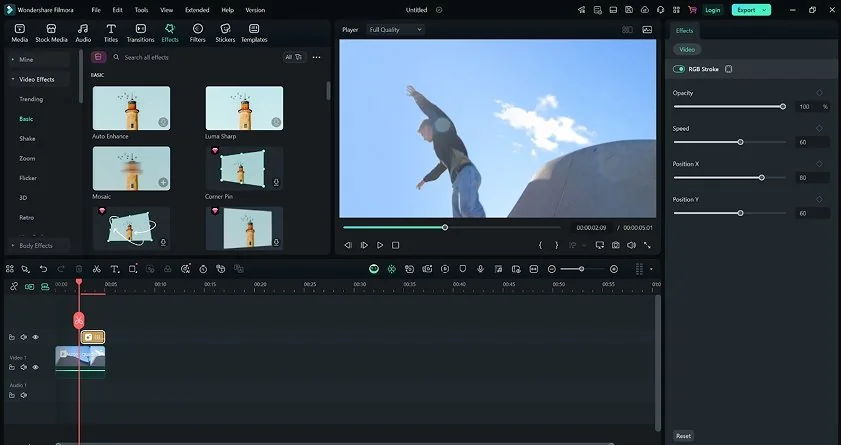
Filmora targets the middle ground between simplicity and functionality. The interface borrows heavily from mobile editing apps but scales well to desktop use.

The built-in effect library is massive – transitions, filters, overlays, animated titles. Everything has a polished, professional look without requiring manual tweaking. Drag-and-drop workflow keeps things moving quickly.

Audio tools include noise reduction, equalizer, and auto-sync for multi-track projects. The green screen removal works reliably, though not quite as sophisticated as Movavi's AI approach.

Recent versions added motion tracking and keyframe animation. Useful for adding text that follows moving objects or creating custom animation paths.

Pros:
  • Extensive built-in effects and templates library

  • Intuitive interface familiar to mobile users

  • Good balance of features vs. simplicity

  • Regular content updates with new effects

Cons:
  • Free version exports with prominent watermark

  • Subscription pricing can get expensive over time

  • Some advanced features locked behind higher tiers

  • Occasional performance lag with 4K footage

Task-based tool selection

Quick social media clips: Movavi Video Editor handles this smoothly. Auto-subtitles for accessibility, fast rendering, built-in templates.

Professional color grading: DaVinci Resolve is the obvious choice. The color tools are industry-standard, and it's free.

Zero budget, basic needs: OpenShot or Shotcut work fine. Both export without watermarks, unlike many "free" commercial options.

Heavy visual effects: HitFilm Express gives you professional compositing tools without the Adobe® subscription.

Learning video editing: Start with Movavi or OpenShot. Both have gentle learning curves and don't overwhelm you with options.

BlueStacks installation guide for KineMaster

If you really want KineMaster for Windows 10 or Windows 11 specifically, here's how to set it up properly:

1. Download BlueStacks from their official site. Avoid third-party download sites – they often bundle extra software.

2. Installation takes 5-10 minutes depending on your system. The installer is around 400 MB, but the full installation uses about 2 GB of disk space.

3. Sign into Google Play Store within BlueStacks. You'll need a Google account – the same one you use on your phone works fine.

4. Search KineMaster in the Play Store. Install the official version (check the publisher name matches).

5. Performance tweaks: in BlueStacks settings, allocate at least 4 GB RAM and enable hardware acceleration if your graphics card supports it.

The mod versions floating around online aren't worth the risk. Most are either outdated, contain malware, or have features that don't work properly. Stick with the official app through a legitimate emulator.

Running KineMaster this way works for basic editing, but expect some quirks. Touch gestures don't translate perfectly to mouse controls, and the mobile interface feels cramped on larger screens. For serious desktop editing, native software performs better.

Free vs. paid: what actually matters

The "for free" promise needs context. Most video editors offer free trials or limited free versions, but the restrictions vary significantly.

Watermarks: almost universal in free versions. Usually a logo in the corner of exported videos. Some tools let you pay per export to remove watermarks temporarily.

Export quality limits: common restriction – free versions might cap at 720p while paid versions export 4K. Check this if you need high resolution.

Effect libraries: free versions typically include basic effects. Advanced filters, transitions, and templates often require payment.

Project length limits: some tools restrict free users to 5-minute exports or similar. Others have no time limits but add watermarks.

Customer support: free users usually get community support only. Paid customers get priority help from the company.

For casual editing, free versions often suffice. If you're creating content regularly or for business use, the paid features usually pay for themselves quickly.

Frequently asked questions

Is there an official KineMaster for PC download?

No, KineMaster doesn't offer a native Windows or Mac version. The only way to run KineMaster on PC is through Android emulators like BlueStacks, which essentially simulate a mobile environment on your computer.

Which Windows versions support KineMaster alternatives?

All the desktop alternatives mentioned work on Windows 10 and Windows 11. Most also support older versions like Windows 8.1, though performance may vary on older hardware. 64-bit systems are recommended for better performance.

Can I edit 4K videos with these alternatives?

Yes, most modern video editors handle 4K footage. Movavi Video Editor, DaVinci Resolve, and HitFilm Express all support 4K editing. However, you'll need sufficient RAM and a decent graphics card for smooth playback during editing.

Do any alternatives offer the same mobile-style interface as KineMaster?

Movavi Video Editor comes closest with its intuitive drag-and-drop interface and simplified workflow. While desktop editors will always feel different from mobile apps, Movavi bridges that gap better than most professional tools.

Are there completely free alternatives without watermarks?

Yes, DaVinci Resolve, OpenShot, and Shotcut are completely free without watermarks on exports. These are your best options if budget is a primary concern and you don't mind a steeper learning curve.

Which alternative is best for beginners coming from KineMaster?

Movavi Video Editor offers the smoothest transition due to its intuitive interface and AI-powered features that simplify complex tasks. The learning curve is minimal compared to professional tools like DaVinci Resolve.

Have questions?
If you can’t find the answer to your question, please feel free to contact our Support Team.
Join us for discounts, editing tips, and content ideas

1.5M+ users already subscribed to our newsletter

By signing up, I agree to receive marketing emails from Movavi and agree to Movavi's Privacy Policy.