Video Voice Changer – Add Voice Effects to Videos

Movavi Video Editor lets you apply fun and realistic audio effects to any video – from deep robotic tones to high-pitched character voices – in just a few clicks.

The app combines audio effect tools, speed and pitch controls, and complete video editing in one free download for Windows and Mac.

Trusted by 70 million creators worldwide

70M+

users

190+

countries

15+

updates per year

10,000+

effects to choose from

Key features of the video voice changer

Everything you need to change the voice in a video, shape sound, and deliver a finished video file.

Built-in audio effects – robot, echo, telephone, radio, and more

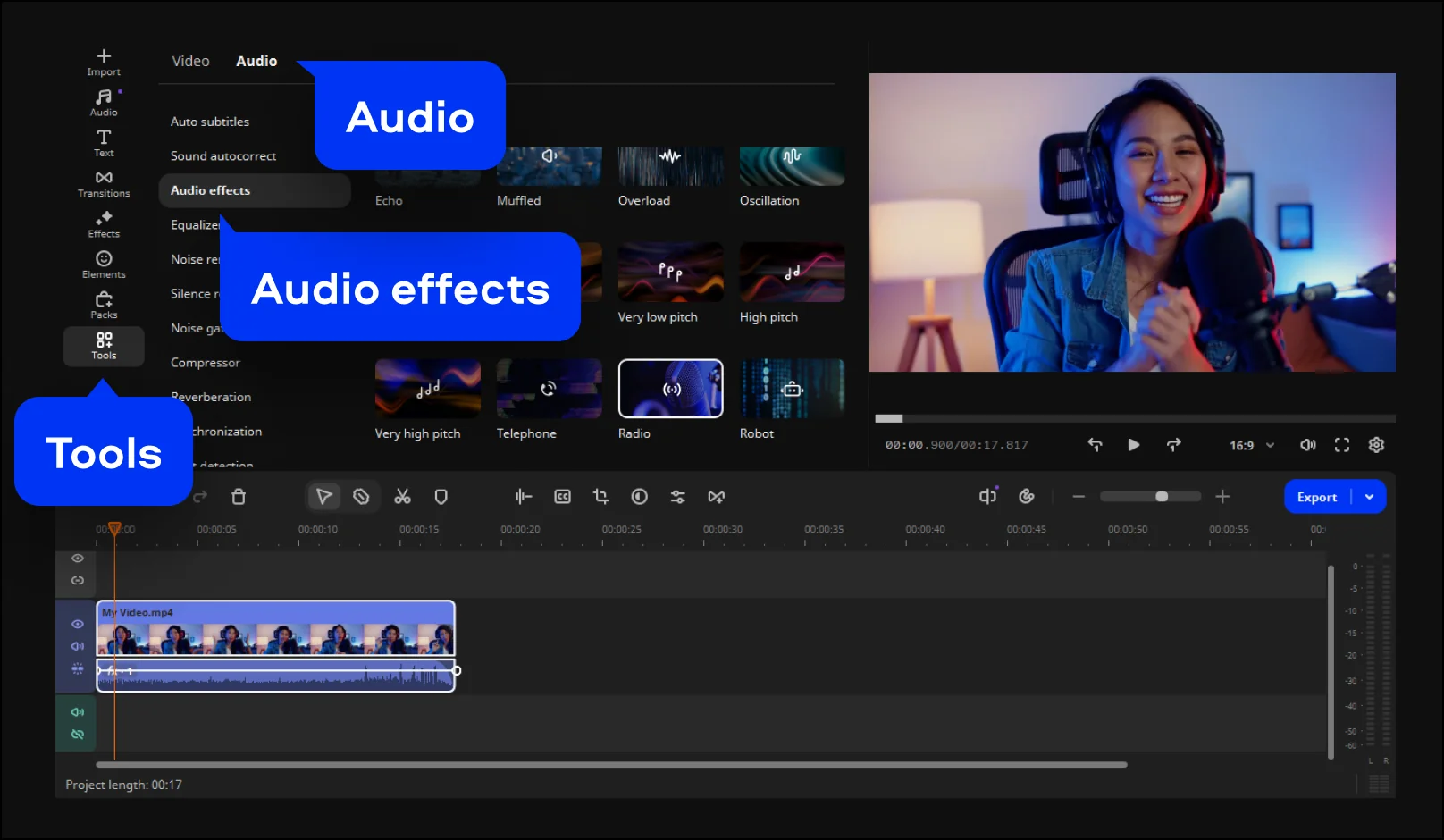
The audio effects library in Movavi Video Editor includes a range of built-in sound effects that transform a normal human voice into something entirely different: robotic, distant, distorted, or processed through a vintage telephone or radio filter. Each effect is applied with a single click and previews in real time before you commit to the export.

Pitch and speed controls for subtle or extreme voice shaping

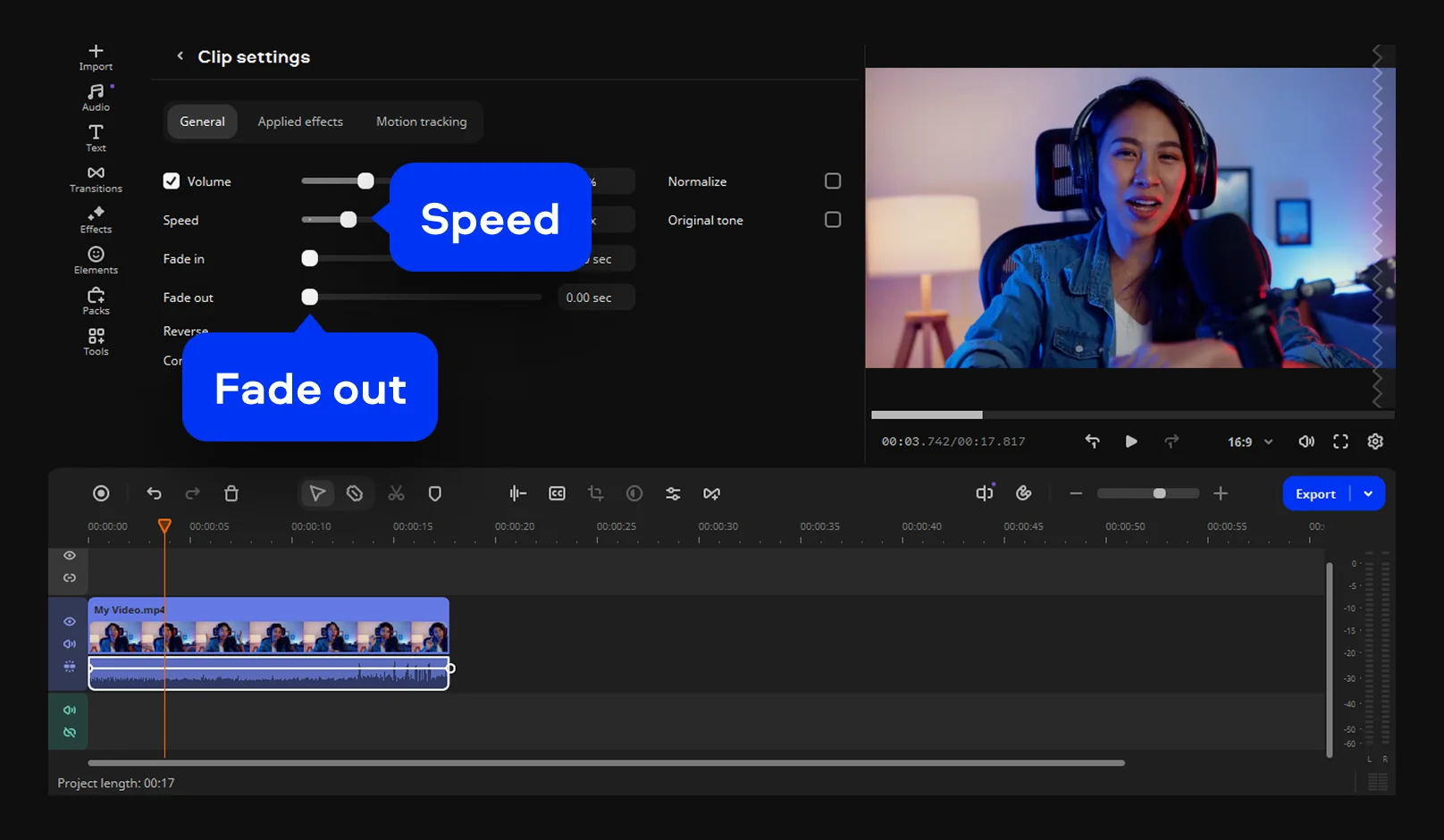
Beyond preset effects, the Speed slider lets you adjust playback rate to make a voice sound faster and higher or slower and deeper – a simple tool that creates a chipmunk effect at one end and a slow-motion rumble at the other. Fade in and Fade out controls let the voice enter and exit smoothly, which is useful for any video where a dramatic or fun sound effect needs a clean transition.

Detach and edit audio tracks independently

Movavi Video Editor lets you separate the audio track from any video clip so you can edit the voice independently from the picture. Detach the audio, apply effects to it, adjust its volume or timing, and then re-attach it – or replace the original audio entirely with a new voiceover or sound effect. This workflow is available for both Windows and Mac installations.

Export in any popular video format

Once the voice transformation is complete, export the finished video as an MP4, AVI, MOV, or other widely supported file format. The free download trial allows full use of the voice-changing tool; the only trial restriction is a watermark on the exported file. The final video is saved locally – no upload, no cloud processing, no file size limits.

Why use Movavi as your video voice changer

Three reasons Movavi is the practical choice for voice editing in video projects.

Voice change and full video editing in one app

Most voice changer tools are standalone apps – you change the audio in one place and then have to import the result back into your video editor. Movavi Video Editor keeps both in the same workspace: apply a fun robot voice effect, trim the clip, add a title, adjust the music, and export the final video without switching applications or re-encoding the file a second time. This saves time and preserves audio quality.

Fun effects and precise controls together

A good app needs to work for both entertainment and practical use. Movavi's audio effects deliver the fun, character-style voice transformations that make content more engaging, while the Speed, Fade in, and Fade out sliders give precise control over the human voice for professional-sounding results. Both approaches are available in the same tool panel, so you choose the level of control you need for each project.

Free download for Windows and Mac

Movavi Video Editor is available as a free download for a PC and Mac, with a 7-day trial giving full access to all voice changer and video-editing tools. The app runs entirely offline, so there are no upload queues, no internet dependency during editing, and no file-size restrictions – important when working with longer video files that would exceed the limits of browser-based tools.

How to change voice in a video with Movavi – 3 steps

From the original clip to a voice-transformed video file ready to share in minutes.

Step 1. Import your video into the video voice changer

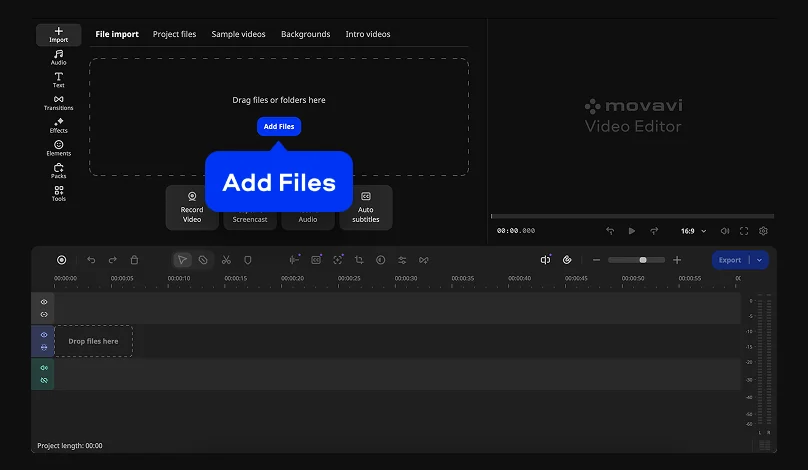
So, here’s how to change the voice in video: first of all, install and launch Movavi Video Editor, then click Add Files and choose the video you want to work with. Your clip will appear in the Project files. From there, drag it down to the Timeline so you can start editing the sound inside the video itself.

Step 2. Open the voice editing controls

Now we’re getting to the movie voice changer. Double click the clip on the Timeline to bring up its editing settings. If you want to reshape the voice more subtly, you can adjust the Speed slider to make the audio sound faster or slower, keeping in mind that this also changes the video playback speed. You can also set Fade in and Fade out if you want the voice to enter or disappear more smoothly.

Go to Tools, open Audio, then click Audio effects and pick the sound effect you want, depending on the mood you’re after.

Step 3. Export the result

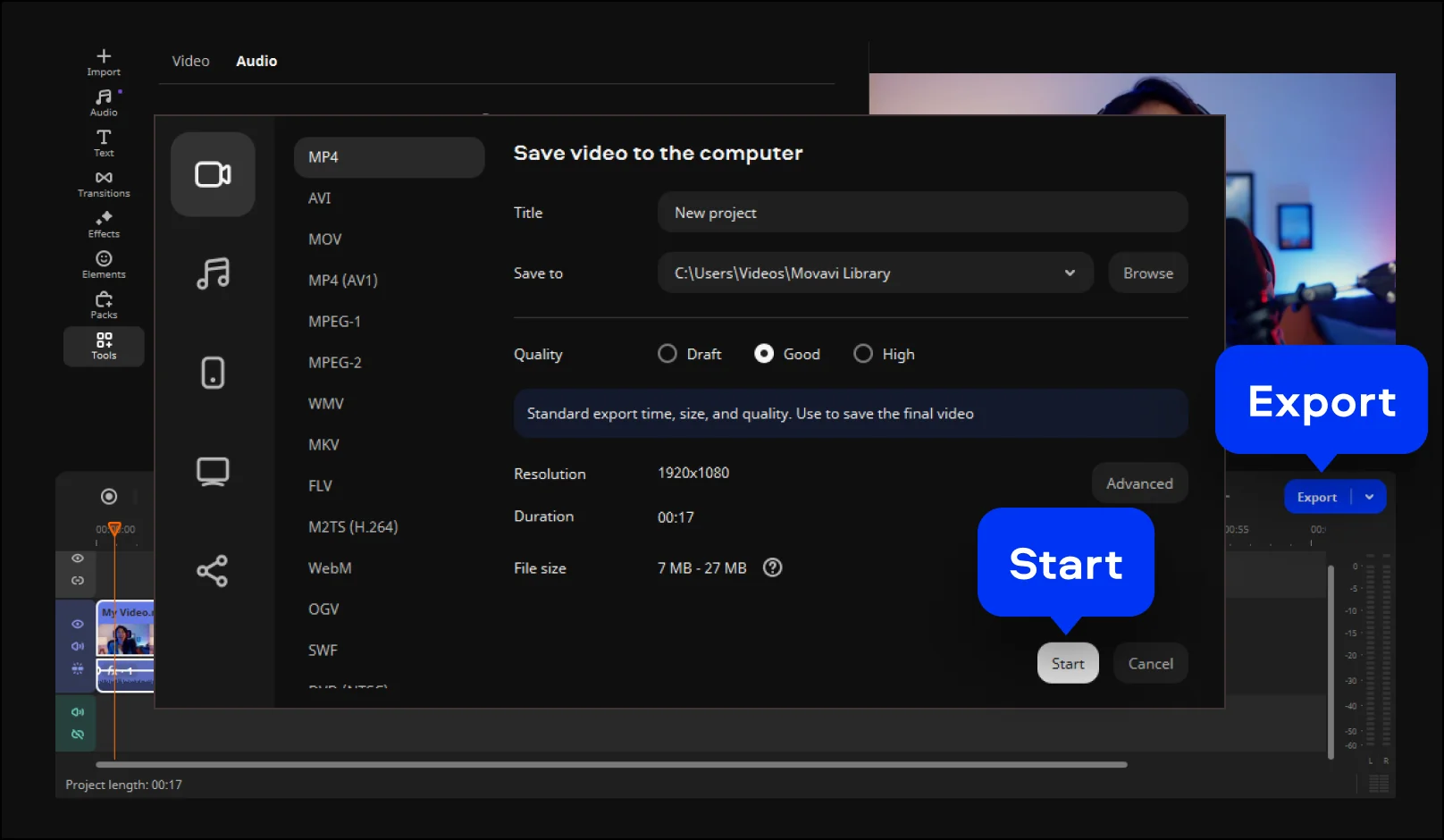
Once the voice sounds right, click Export, choose the output format such as MP4 or AVI, set the file name and save location, and finish by clicking Start.

Who uses a video voice changer

Changing voice in videos is useful for entertainment, creative projects, and practical privacy needs.

Gaming and entertainment content creators  ·  CONTENT CREATION

Gaming YouTubers, TikTok creators, and short-form video makers add fun character voices, robotic tones, and comedic audio effects that make their content more entertaining. Movavi's built-in audio effect library gives them a range of sound transformations – from deep movie-trailer voices to squeaky chipmunk effects – that can be applied in seconds without leaving the video editor.

Independent filmmakers and storytellers  ·  FILMMAKING

Indie filmmakers and narrative video creators use a movie voice changer to give characters distinctive vocal identities when budget or logistics make it impossible to hire voice actors. Applying a telephone or radio filter to a voice makes it sound like it is coming through a specific device, while pitch and speed adjustments give a character a non-human quality – essential for sci-fi, horror, or animation-style projects.

Privacy-conscious creators and educators  ·  PRIVACY

Educators, documentary makers, and interview creators who record sensitive content – where the identity of a speaker needs to be protected – use a voice changer to anonymise a human voice before publishing. Movavi's audio effects alter the recognisable characteristics of a person's voice enough to prevent identification while keeping the content of the speech fully audible and understandable.
Frequently asked questions

Common questions about voice-editing tools, apps, legality, and free options.

How do I change voice in video editing?

The standard way to change voice in a video during video editing is to use the audio effects panel in a desktop editor. In Movavi Video Editor, the process is three steps: import the video file, double-click the clip to open its audio settings, go to Tools AudioAudio effects, and select the sound effect that matches the transformation you want. Effects like Robot, Telephone, Echo, and Radio each modify the human voice in a distinct way. For pitch-only changes without a preset effect, the Speed slider shifts the tone of the voice up or down – faster for higher, slower for lower. For a completely new voice, detach the audio track, delete it, record a new voiceover through Movavi's built-in recorder, and apply effects to the new recording instead.

Does CapCut have a voice changer?

Yes, CapCut includes a voice changer tool on both mobile and desktop. In the mobile app, tap your audio clip, select Voice Effects, and choose from options such as Chipmunk, Monster, Megaphone, Echo, and others. The desktop app has a similar Audio Effects panel. CapCut's voice changer for videos is a fast, app-based tool suited to short social media content. The selection of effects is narrower than a dedicated desktop app, and export quality on the free plan is limited by watermarks and resolution caps. For longer video projects and more precise pitch control, a desktop tool like Movavi Video Editor gives more control, higher output quality, and no file-size restrictions.

Are voice changers legal?

Using a voice changer is legal in the vast majority of contexts. Changing your own voice for creative projects, fun content, entertainment videos, or privacy protection is perfectly fine and widely practised. The legal line is crossed when voice changing is used to impersonate a real person without consent, to deceive people in a harmful way, to commit fraud, or to produce deepfake content that damages someone's reputation. Several jurisdictions are introducing legislation specifically targeting AI voice cloning and synthetic media used for harmful impersonation. The safe and general rule is straightforward: if you are changing your own voice or a consenting participant's voice for an honest creative or privacy-related purpose, you are on solid legal ground. If the goal is to mislead, impersonate, or harm, the tool itself is not the issue – the intent and use is.

Is there a totally free voice changer?

Yes, several tools are available free of charge. Movavi Video Editor offers a free download with a 7-day trial that gives full access to all audio effects and editing tools; the trial adds a watermark to exported video files. Audacity is a fully free audio editor with pitch-shifting and effects that can process a detached audio track – though it requires more steps than an integrated voice changer video editor. Browser-based tools like Voicechanger.io and Voice.ai offer free online voice transformation, though they typically limit download quality, the number of effects available, or the length of files they will process without a paid plan.

Join us for discounts, editing tips, and content ideas

1.5M+ users already subscribed to our newsletter

By signing up, I agree to receive marketing emails from Movavi and agree to Movavi's Privacy Policy.