MKV Editor – Edit MKV Files with Movavi

Movavi Video Editor imports MKV files directly and lets you cut, trim, color-correct, and enhance any video before exporting it in MKV or any other popular format.

As a full-featured video editor, it handles everything from basic cutting and trimming to audio adjustments and effects.

Trusted by 70 million creators worldwide

70M+

users

190+

countries

15+

updates per year

10,000+

effects to choose from

Key features of the MKV video editor

Everything you need to edit MKV efficiently – cut, enhance, and export – without format conversion.

Import and edit MKV videos without conversion

Movavi Video Editor accepts MKV files directly in the import dialog so there is no need to convert to MP4 or another format before editing. The video appears on the timeline as soon as you import it, and all editing tools are available immediately. This eliminates the extra conversion step that many other editors require and avoids the quality loss that can come from unnecessary re-encoding.

Cut, trim, split, and rearrange clips

The timeline gives you precise control over the video: set in and out points to trim unwanted footage from either end, cut the clip at any frame, and rearrange segments to change the sequence. For long videos – recordings, downloads, or converted video – splitting into sections first makes the edit significantly faster and easier to manage.

Color correction, filters, transitions, and titles

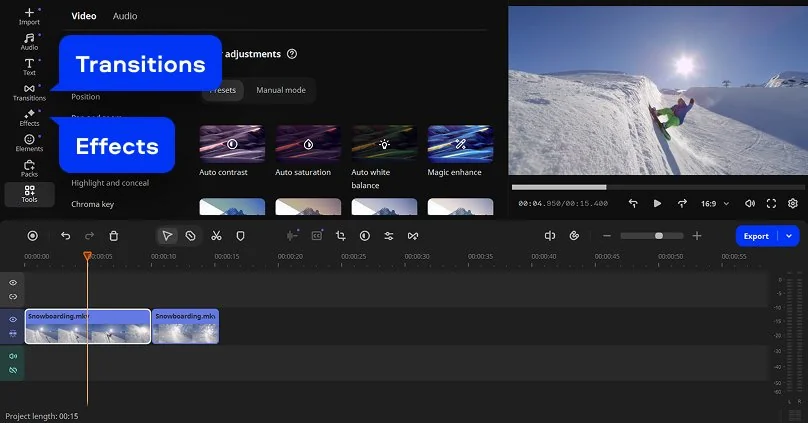
Movavi Video Editor gives you a complete enhancement toolkit: color adjustment presets and manual sliders for brightness, contrast, and saturation; over 10,000 filters, transitions, and effect presets from the library; and text tools for adding titles, captions, and lower-thirds. All of these tools work directly on the MKV file without converting it to a different format first.

Export MKV to any format or keep it as MKV

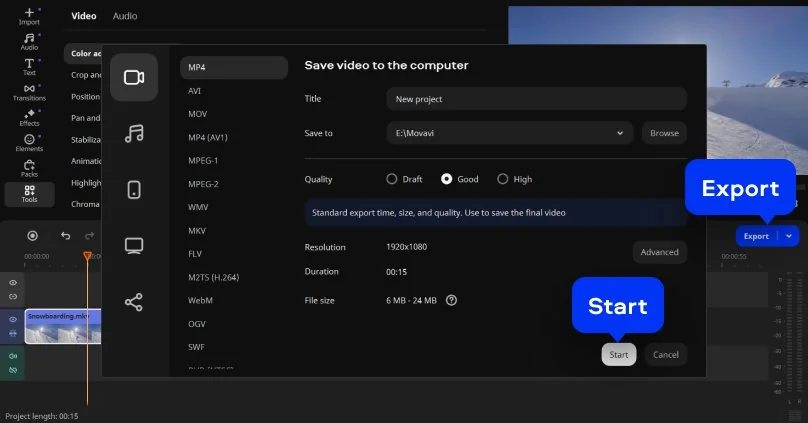
When video editing is complete, export the finished video back to MKV at the original quality, or convert it to MP4, MOV, AVI, WMV, or any other widely supported format. The export dialog gives control over resolution, bitrate, and codec. This flexibility means the same video editor tool handles both pure MKV projects and format conversion in a single workflow.

Why use Movavi to edit MKV files

No conversion step – edit MKV directly

The most common frustration with MKV editing is that many editors refuse to import the format and require conversion to MP4 first. Movavi accepts MKV files natively – you drop the file in, it goes straight onto the timeline, and all editing tools are available. This saves the time spent waiting for a conversion pass and avoids the quality reduction that comes with unnecessary re-encoding before the actual edit.

 Edit MKV and finish the video in the same app

You can apply color correction, add a music track, place title cards, and insert transitions, then export the finished video, all without switching applications. This matters for any project where the file needs more than just basic cuts – presentations, content creation, or any use case where the final video needs polishing.

Free download on Windows and Mac

Movavi Video Editor is available as a free download for Windows and Mac, with a 7-day trial giving full access to all editing and export tools before any purchase is required. The trial adds a watermark to exported files. For the majority of editing tasks – trimming, enhancing, and exporting – the free trial gives you everything you need to evaluate the tool before committing.

How to edit MKV files with Movavi – 3 steps

From a raw clip to a finished, export-ready video – without any conversion.

Step 1. Import your MKV video

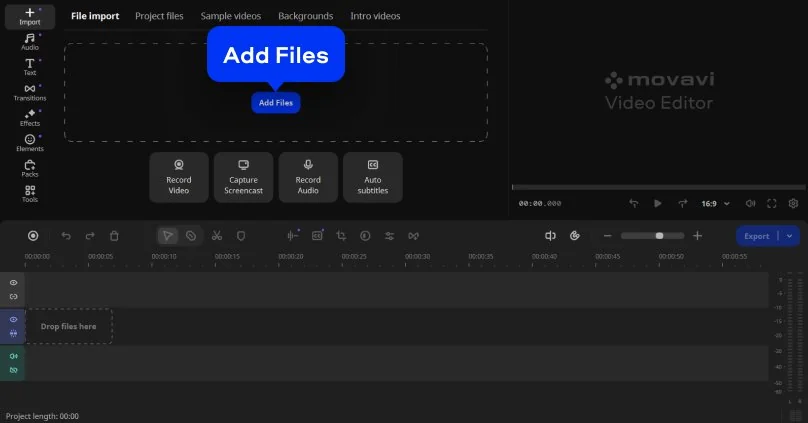
Launch Movavi Video Editor and click Add Files to upload your MKV file. Once the file appears in the project files, drag it to the Timeline. This is where you start shaping the project. If your footage is long or messy, split it into smaller parts first so you can work faster and keep the edit under control.

Step 2. Edit and enhance the video

Select the clip on the Timeline and start trimming unwanted parts. You can cut scenes, rearrange segments, crop the frame, and adjust color settings to improve the look of the video. Add transitions, titles, stickers, or filters if you want the result to feel more polished. You can also open the audio tools to lower noise, fix volume, or add background music.

Step 3. Export the finished file

When the edit is done, click Export and choose the format you need. You can save the project as MKV again or pick another format such as MP4, MOV, or AVI. Set the resolution, quality, and destination folder, then start the download. After that, your edited video is ready for upload, storage, or one more round of obsessive rewatching.

Who needs an MKV editor

MKV is a widely used container format – these are the most common situations where editing videos becomes necessary.

Content creators working with downloaded or recorded videos  ·  CONTENT CREATION

Many video downloads, screen recordings, and exported files from production tools arrive as MKV files. Content creators who want to trim, re-edit, or repurpose this footage benefit from an MKV editor that does not require conversion first – it removes a time-consuming step and keeps the project moving. Movavi Video Editor lets them cut the clips, add their own branding, music, and titles, and export in whatever format the target platform requires.

Gamers editing gameplay recordings  ·  GAMING

Many screen recorders and game capture tools, including OBS Studio and Nvidia ShadowPlay, output footage in MKV format by default. Gamers who want to clip highlights, add commentary, or produce YouTube content from their recordings need a video editor that handles these files without conversion. Movavi allows them to cut the relevant clips from a long session recording, add a music track, and export directly to MP4 for upload.

IT and media teams managing video archives  ·  PROFESSIONAL

Corporate media teams, IT professionals, and archivists who maintain collections of training videos, presentations, or documentation often have large files that need trimming, updating, or format conversion for new distribution platforms. A reliable editor for a PC that handles direct import and flexible export avoids the complexity of managing additional conversion tools and keeps the editing workflow self-contained.
Frequently asked questions

Common questions about editing MKV, compatibility, and free tools.

How can I edit an MKV file?

The most straightforward way is to use a desktop editor that supports the format natively. In Movavi Video Editor:

  1. Download and install the app.
  2. Click Add Files to import your files and drag it onto the Timeline
  3. Use the cut, trim, split, and enhancement tools to make your edits.
  4. When finished, click Export to save the file back as MKV or convert it to MP4 or another format. 

Alternative video-editing tools include DaVinci Resolve (free, professional-grade, steep learning curve), VLC (free, basic trimming only via the Convert/Save function), and MKVToolNix (free, specialised for MKV container manipulation rather than content editing). For users who need both editing and the ability to add effects, music, and color correction, Movavi Video Editor covers all of those needs in one application.

Why can't VLC play MKV?

VLC supports MKV in most cases – it is one of the few players that handles the format reliably. When VLC fails to play this format, the most common causes are: a missing or corrupted codec inside the container (the file may contain a video track encoded in a codec VLC does not have installed), a damaged or incomplete file (partially downloaded files often fail), an outdated version of VLC that predates support for a newer codec, or a hardware acceleration conflict. Updating VLC to the current version resolves the codec issue in most cases. If the file is incomplete or corrupted, a repair tool like MKVToolNix can sometimes fix the container structure.

Is MKV worse quality than MP4?

No, MKV and MP4 are container formats, not codecs. The visual and audio quality of a video depends on the codec and bitrate used inside the container (H.264, H.265, AV1, etc.), not on whether the container is MKV or MP4. An MKV file and an MP4 file encoded with identical codec settings will look and sound identical. MKV is often associated with higher quality because it is the preferred container for high-bitrate video and because it supports multiple audio tracks, subtitle tracks, and chapters in a single file – capabilities that MP4 handles less flexibly. When you edit MKV clips and export back to MKV or MP4, the quality is determined by the export bitrate and codec you choose, not by the container format.

Is MKVToolNix free to use?

Yes, MKVToolNix is completely free and open-source, available for Windows, Mac, and Linux at no cost. It lets you merge, split, remux, add or remove tracks, and edit metadata in files without re-encoding the video – meaning the operations are fast and lossless. What MKVToolNix cannot do is cut content from within a clip at a specific frame, apply color correction, add music or titles, or export to a format other than MKV. For those tasks you need a desktop video editor like Movavi. A typical workflow combines both: use MKVToolNix for container-level operations (extracting a specific audio track, merging two clips) and Movavi Video Editor for content editing (trimming, enhancing, and re-exporting the video for distribution).

Join us for discounts, editing tips, and content ideas

1.5M+ users already subscribed to our newsletter

By signing up, I agree to receive marketing emails from Movavi and agree to Movavi's Privacy Policy.